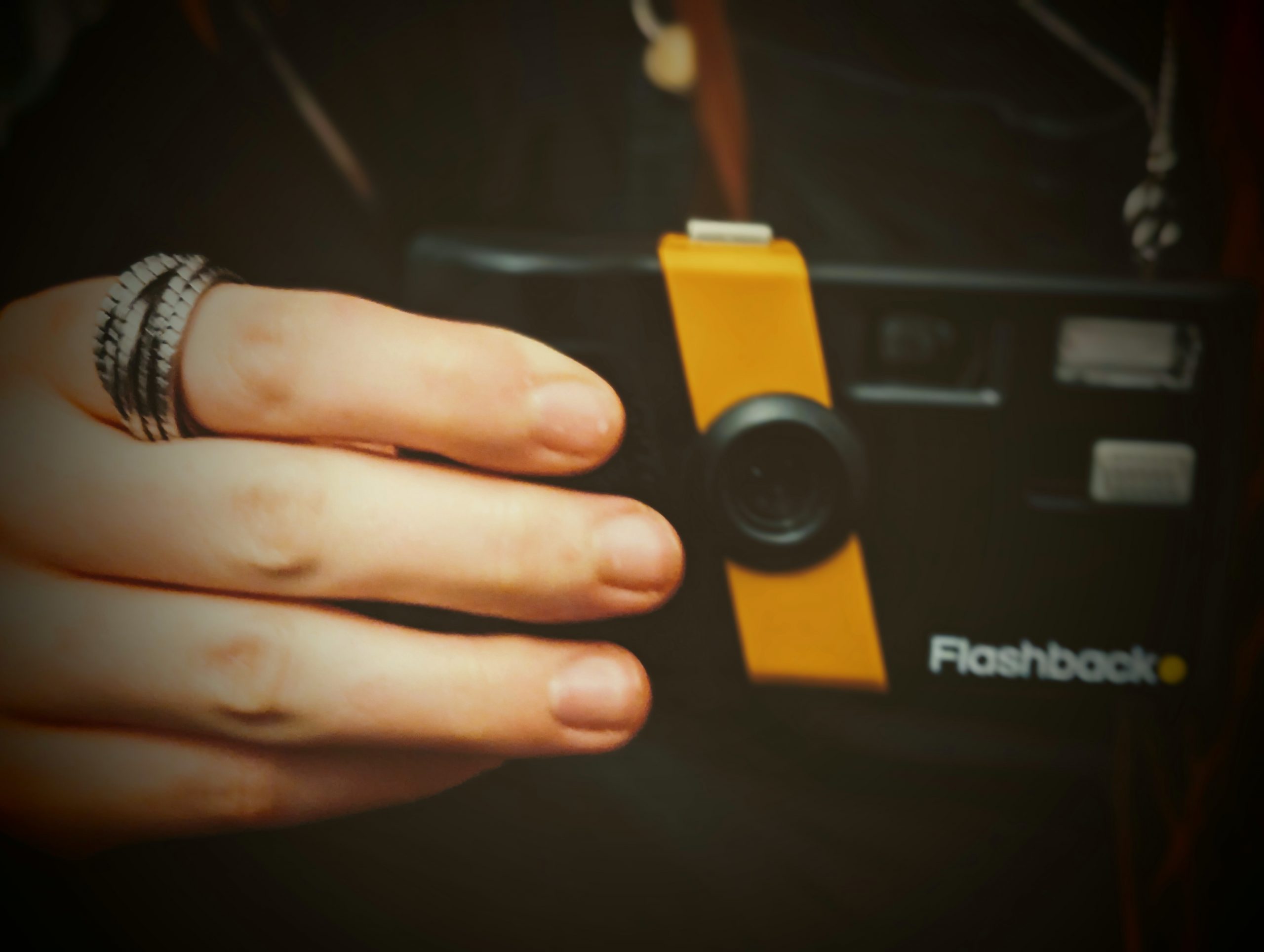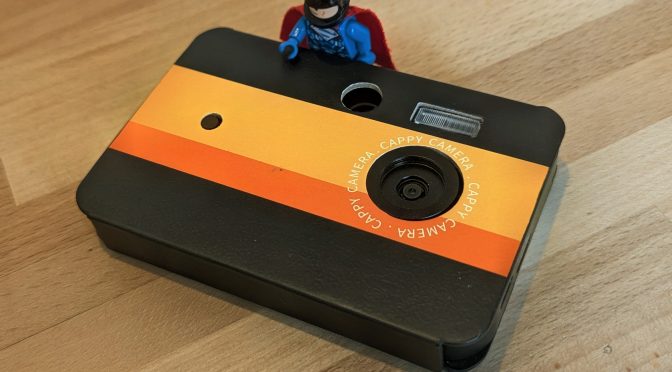
Finally 18 months after it originally launched I finally have got my hands on a Cappy Camera. But was this worth £145 I paid for for it via Amazon? Cappy would you have you believe this the best screenless on the market. I’d been expecting a Cappy with a silent R but it actually was better than expected – although there some issues.
Disclaimer – I have not been paid by Cappy or their rivals at any point. I have historically been given beta testing filter files by Camp snap and have been approached to test the new version of the Flashback One3. Neither has come with any pecuniary advantage or impact on my editorial freedom. There is a link here to Amazon for which I get commission on if you buy stuff. It doesn’t cost you more and you can ignore it or go to another retailer completely
Time to spill some tea
So I’ve been doing post on this camera since 2024 and I’m not going to detail the fairly acrimonious birthing process of this camera. I’ve already done several post on this already such as this one detailing it’s history & fall in 2024 and this one recently about the return
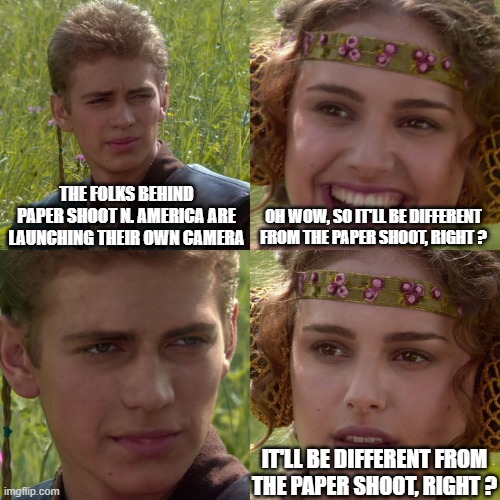
Very quickly it’s launched by the folk who used to Distribute the Paper Shoot Camera in North America who had a falling out with the parent company
So it’ll be something radically different to the Paper shoot ?
Erm….
The Cappy Camera is a screenless digital with a swappable eco-friendly cover, 4 switchable filter (which on paper can be switched via a SIM card) and a video mode.
Sound Familiar? Well you could pretty much swap Paper shoot into that description.
But hey it has a inbuilt battery & Flash (Yah). Shame it’s LED (urrrg)
Unboxing and first issues
I got this via Amazon for around £145GBP all in (that price will vary). I’d given up on Cappy ever being available to the UK. Their website doesn’t allow orders outside the US at the moment. The current price is $155 before taxes and shipping so I don’t feel too short changed by Amazon. .
Jeff Bezos’s team actually delivered this early to me although as often the case it got left on my step. I wouldn’t have minded but I was in !!!
The Box is quite nice with good branding. Inside is the camera and a USB to USB-C cable for charging/PC connection. and erm that’s it. There’s a QR code to the manual. Now this spartan approach isn’t awful and shows some eco cred.
But for less than my £144 quid at least Paper Shoot gave me a crappy strap. But I digress
Cappy bundle the camera with a 32GB micro SDHC card. They make a big play on this as indeed it’s the biggest preinstalled on the screenless market. More commonly we see 4GB. For stills it arguably is overkill as this camera can take over 10,000 photos. But the video feature makes this Logical.
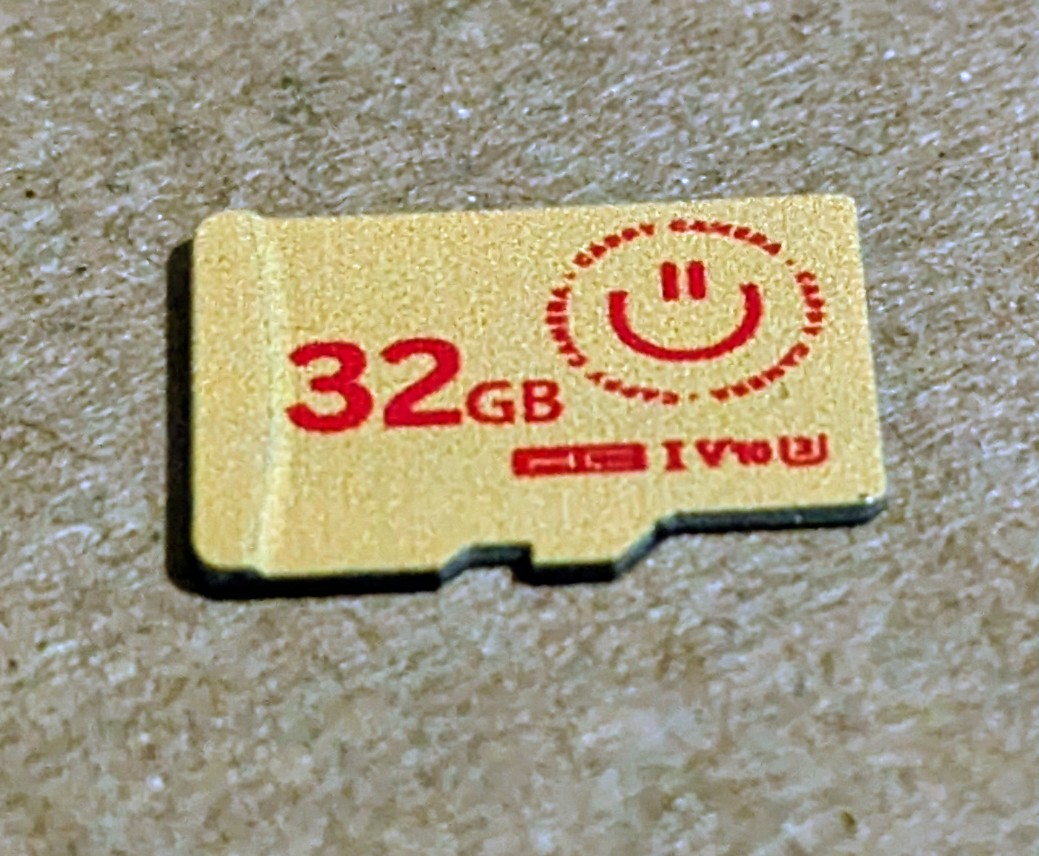
But as with everything Cappy the Card spec takes some liberties.
So this is apparently a (SD) HC I V10 U3 card. Now the SDHC bit has to be real but a class I card and U3 mean the card should run at a minimum of 30MB/Sec aka V30. Not V10.
The manual ?
That QR code takes you the instructions which looks like it was written by an Eleven year old that has been held back a couple of grades There’s typos and the grammar is pretty staccato
Get beyond that and you realise the camera needs a 4 hour charge to work!! The info is kinda there that you need however. It just needs a re-write.
Build
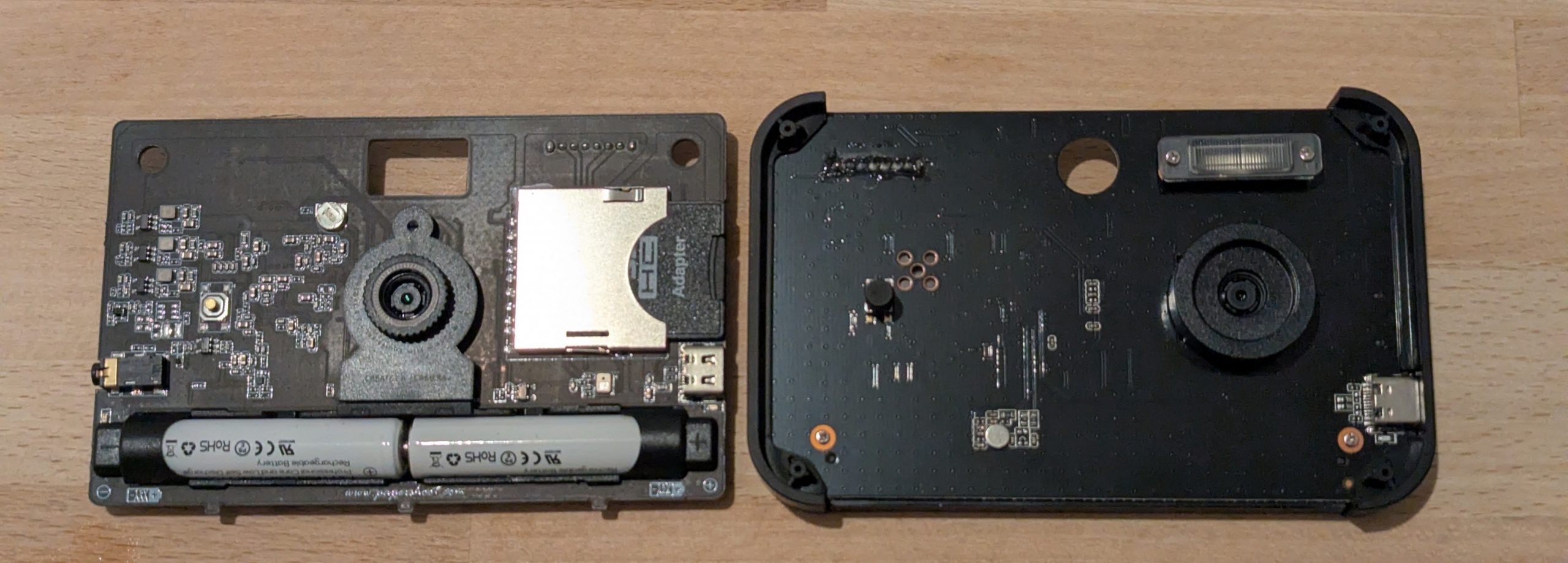
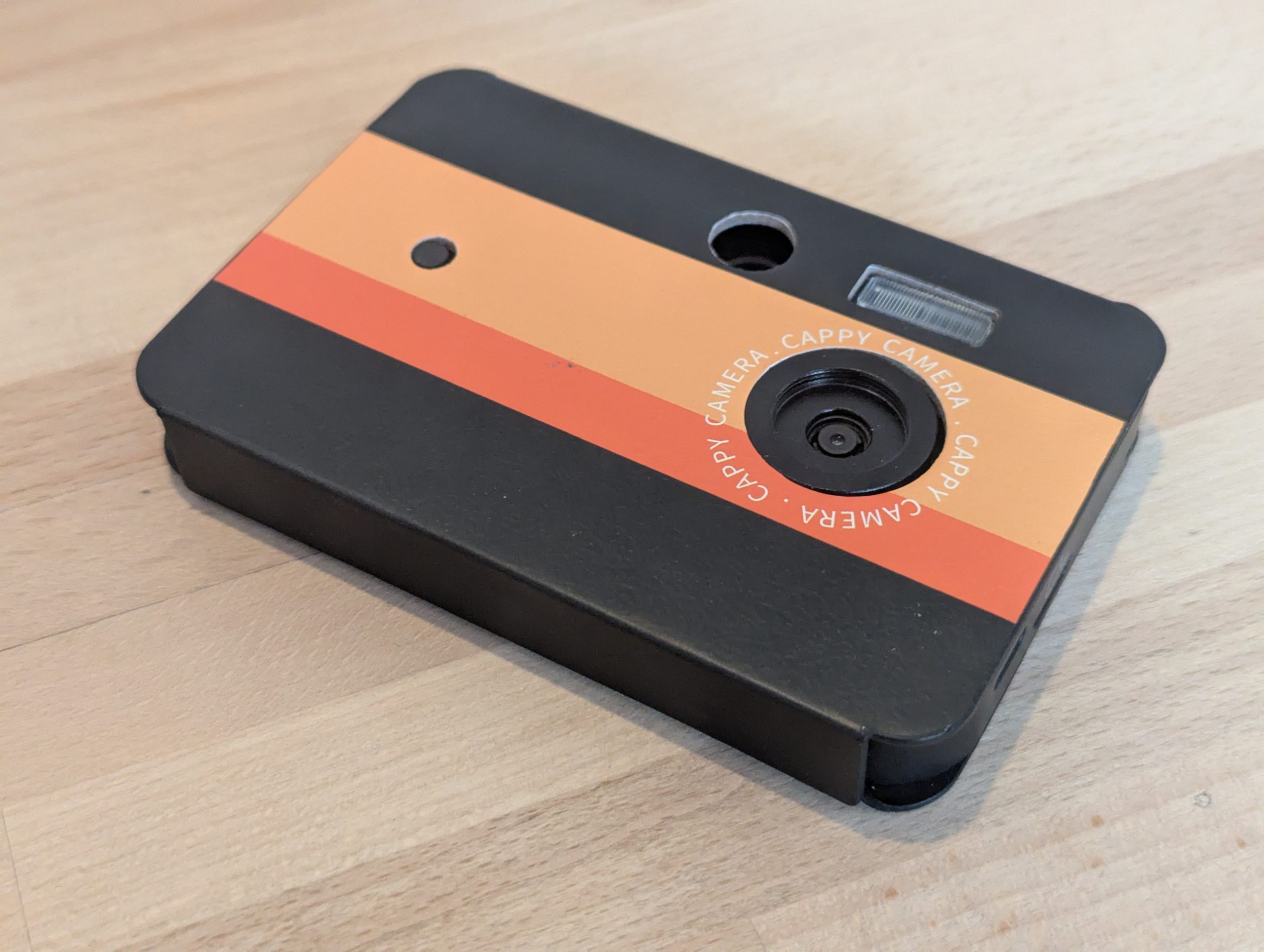
So we have a Plastic inner containing the PCB. It’s less busy than the Paper Shoot with few features on the camera lens side. The plastic around the PCB has a raised rim providing some protection from intrusion although I can still see dust getting in but it does feel more protection than you’d get with the Paper Shoot. Ports likewise feel more solid and there are loop points on either side of the case for straps which are nice
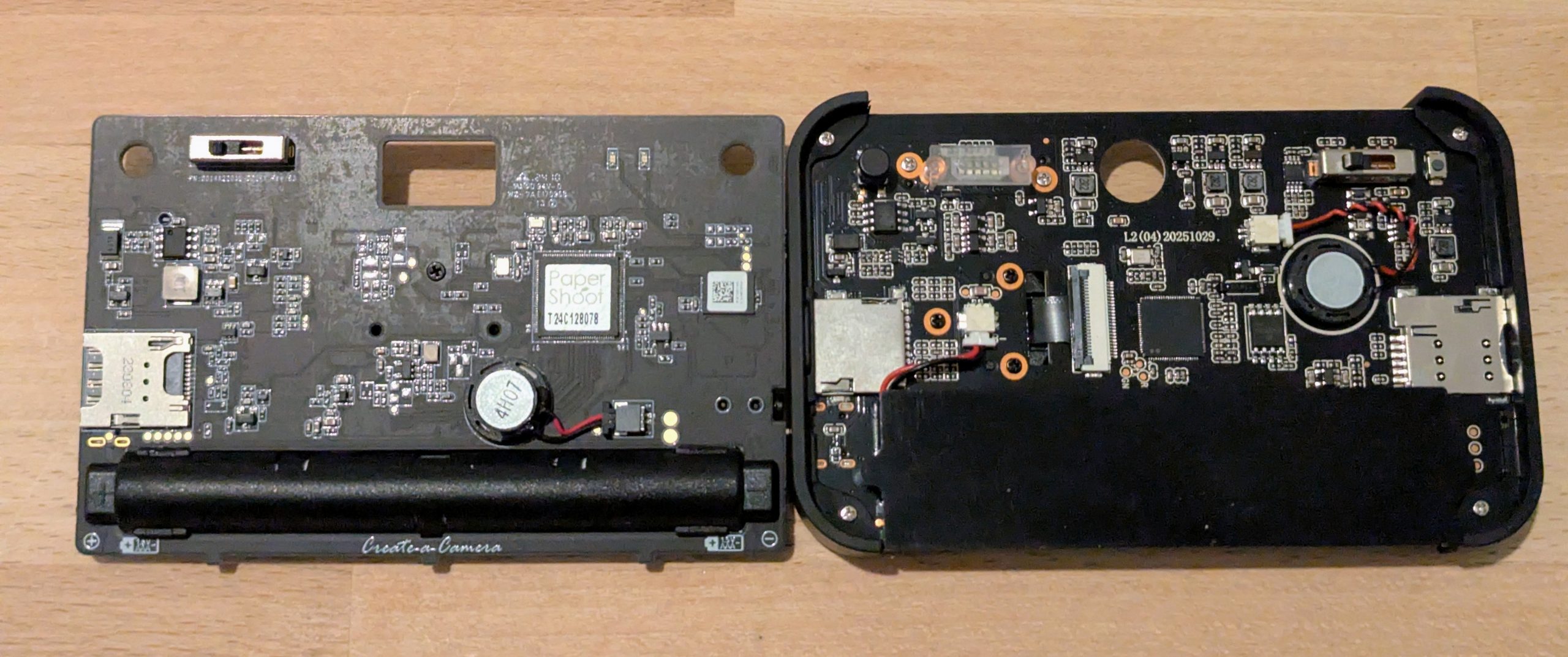
The raised rim makes it slightly chunkier than the paper shoot but still easily pocketable.
The wrap around case is a mix of good and bad. On the plus magnetic fastening allowing you to remove and secure easier. Like the Paper Shoot it uses Stone Paper (just like Paper Shoot). This made from crushed mineral and resin and is more durable, water resistant and eco friendly compared to card.
The case and body are curved. The case is slightly wider on the curves running a risk of snagging (shame as the curving greatly reduces that).
But….
There’s always a but.
My case didn’t quite fit perfectly so much that the on button was jammed. I had to slightly widen it but I really shouldn’t have to a £144 camera. This isn’t great. At the time of typing there are 9 case designs.
Layout
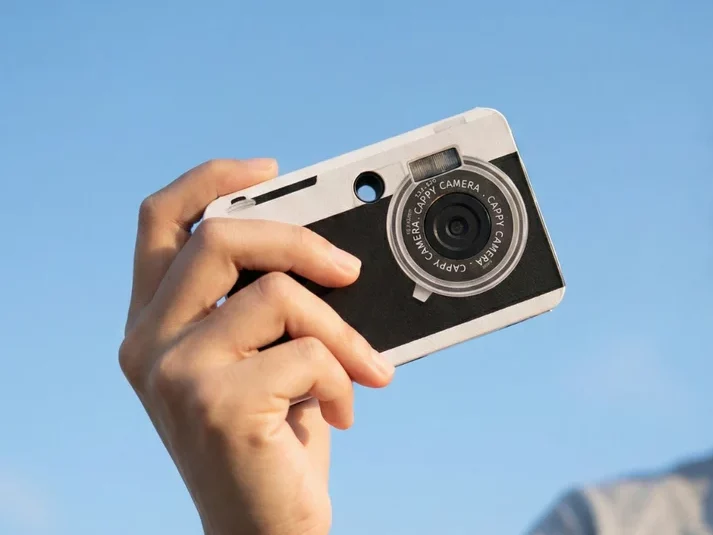
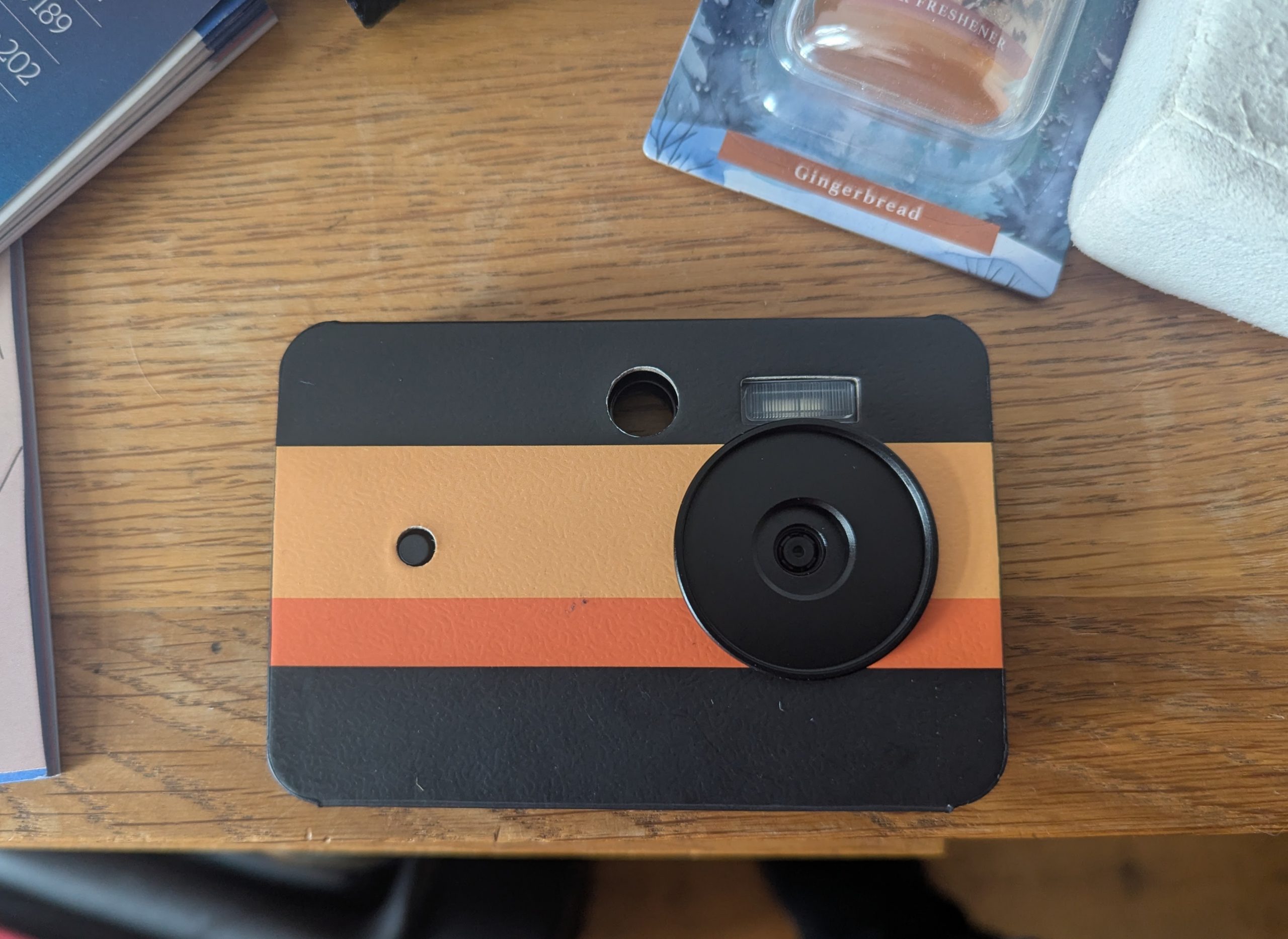
So we have an off centre lens sitting under the flash with a very central simple finder/. this porthole is pretty limited in FOV
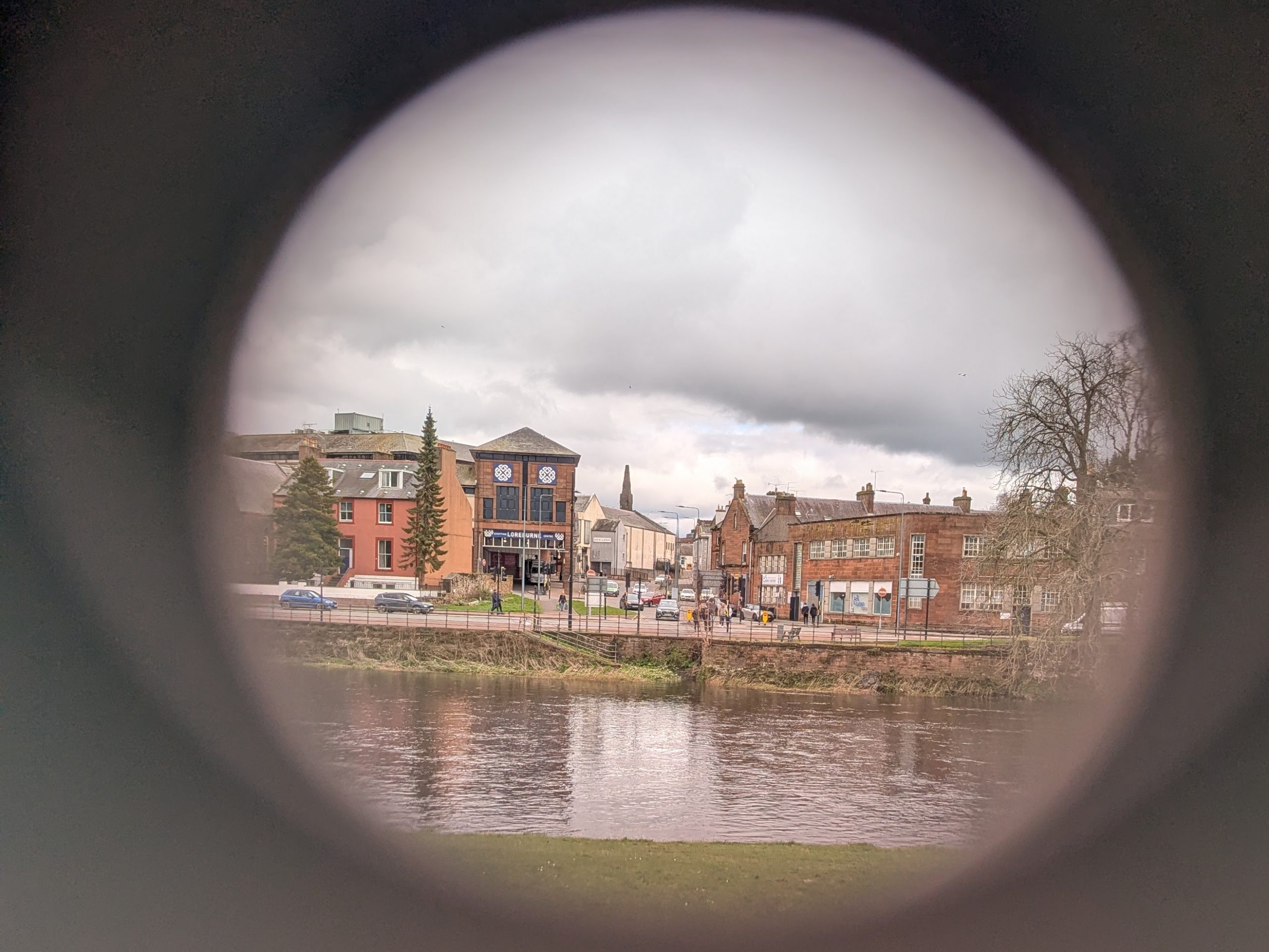
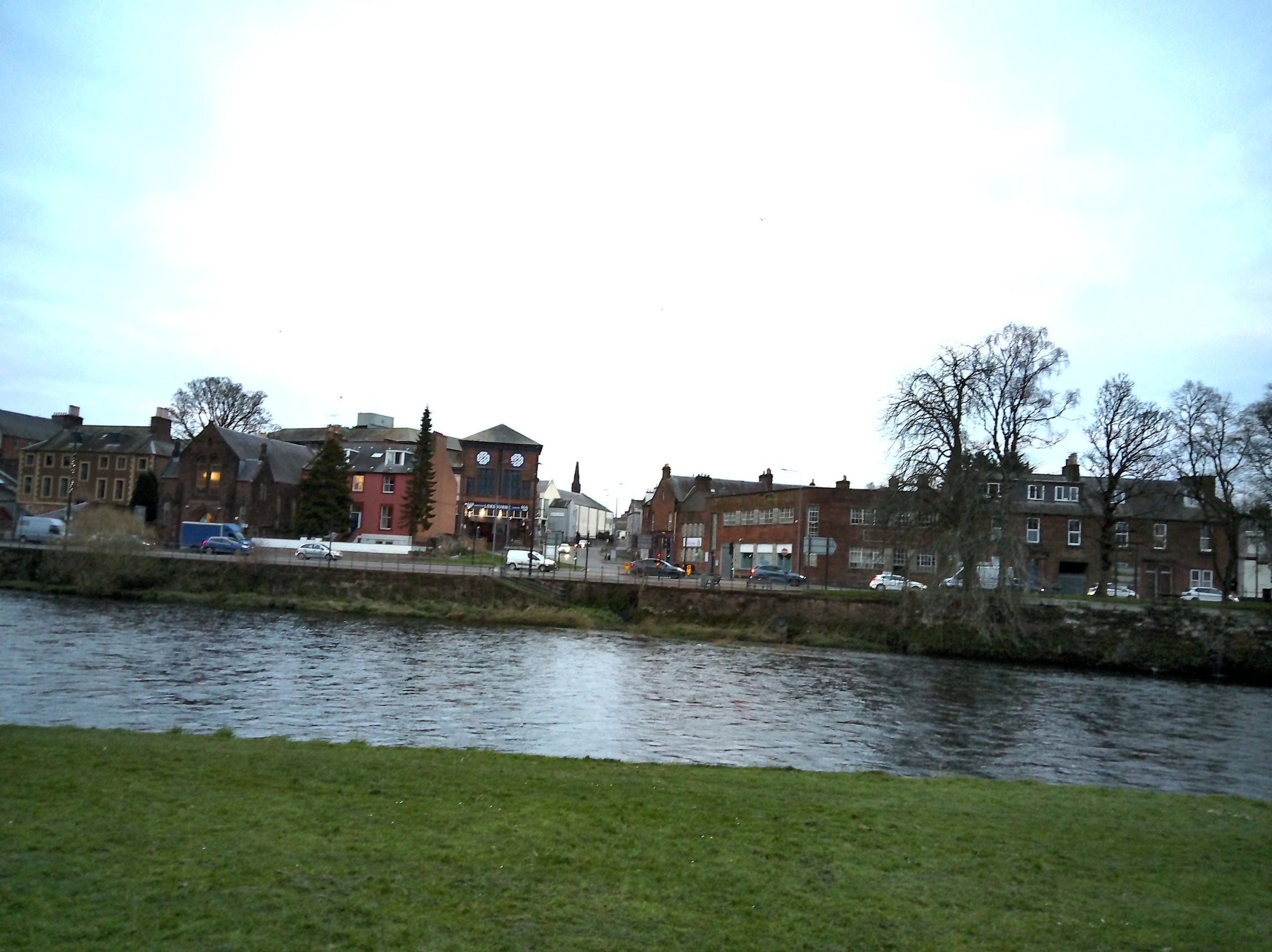
Bit sad given some finders we’ve seen recently but in line with other older lo-fi cameras. It’s not bad at distance but parallax may be an issue close up.
But the porthole makes it hard to squarely frame your shots. Other finders may be as bad in term of FoV but at least you know which way is up..
There is a front shutter button. Hold this down brief to take a still or hold for few seconds and it bleeps to trigger video.
On rear we have the on/off power button below a multicoloured LED light window. This shows battery level and if flash is on. There is a switch to the other side of the finder for filters but unlike Paper Shoot this isn’t marked making it hard to remember what filter you’re in
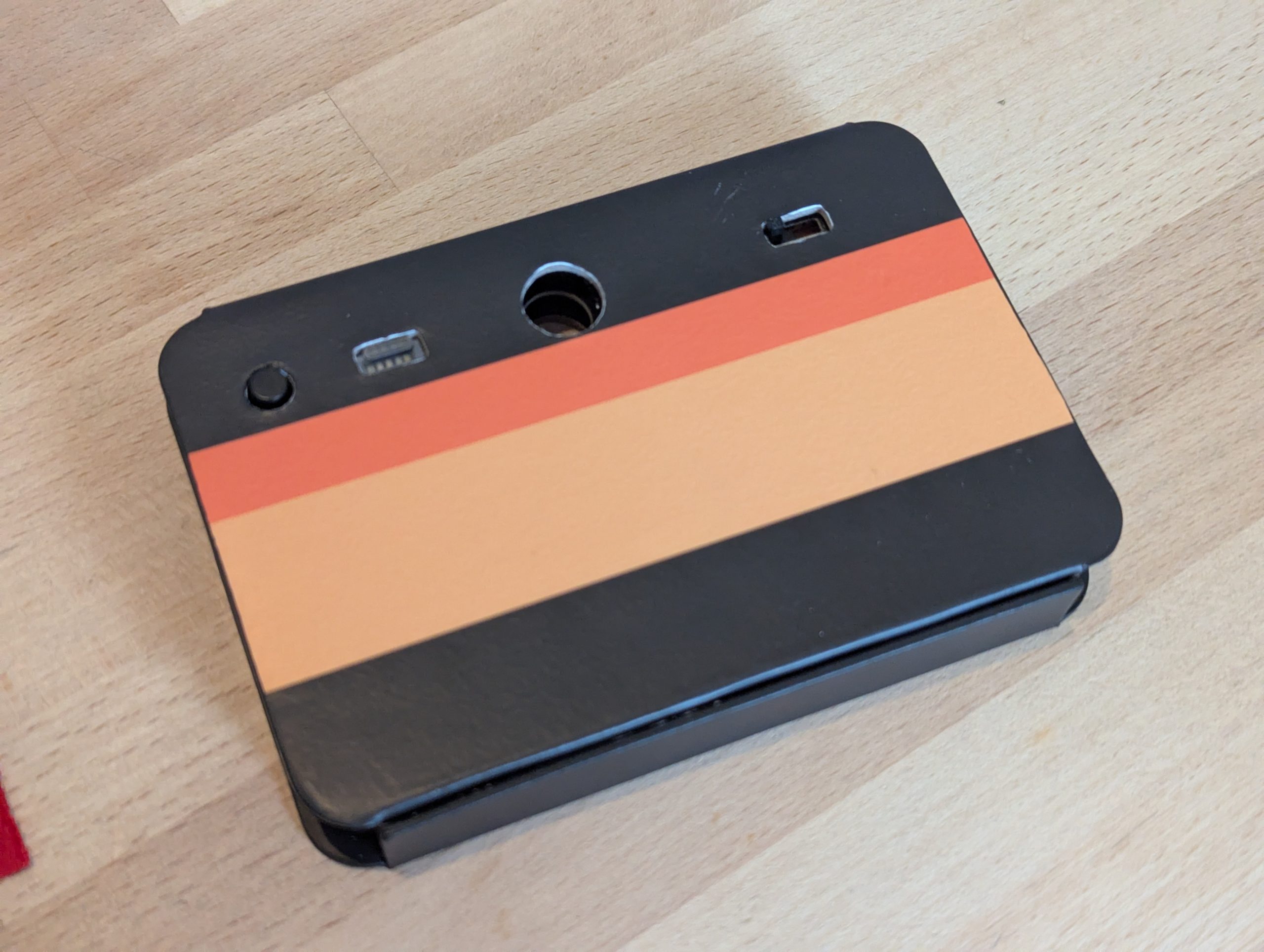
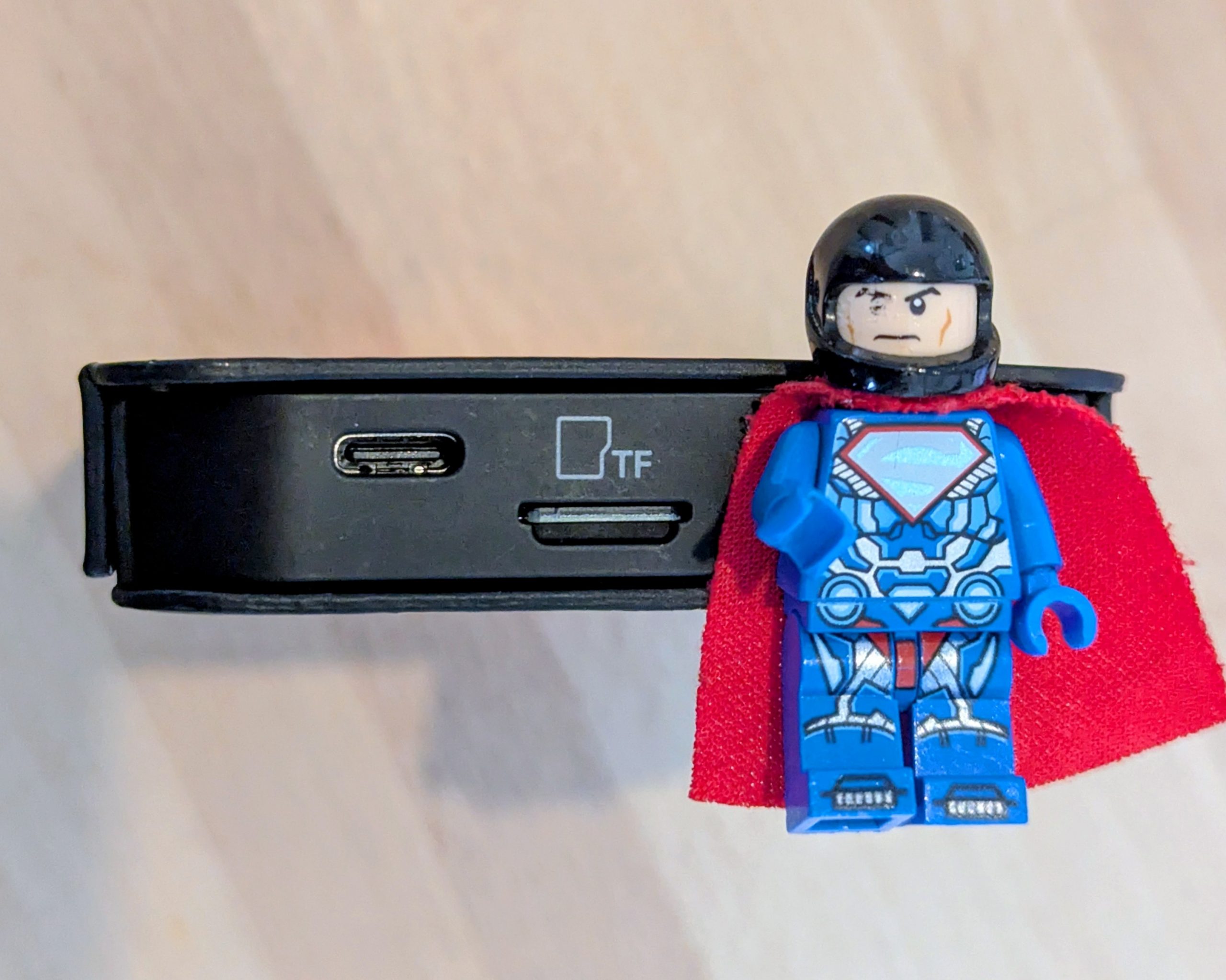
On one side you get the USB-C connector and micro SD card cslot and other other a SIM slot for future filter packs.
Spec
Cappy give the follwing info
20MP with built in battery and a bundled 32 GB micro SD. And boy do they like to go about that card. Don’t get wrong more is good but given the Camp Snap with 4 GB can take 2000 images (so that’s 280 image a day for a week) and 32GB cards cost about a tenner for a branded one , it starts to become less of a big deal. Video is recorded at HD 30fps MP4 format.
Charging is Via a USB-C port. There is a slot for future SIM cards that carry optional filter packs.
And erm… that’s it
Cappy don’t tell you but their accessory screw in filter ring is about 17mm as I was able to use this 17mm to 37mm step up ring. The off centre lens means you’ve some wiggle room in using filters without blocking the finder.
This is a problem as we can’t confirm an equivalent focal length and try to back calculate the sensor size. Still we’ll try in a mo. But to get there, let’s detour into the EXIF
-EXIF Data issues
EXIF shows a Video King-L2 sensor with a 3mm f/1.8 lens. There is no information online about that sensor. We’ll come back to the lens in a mo. But there are big problems with the EXIF data when it comes to exposure.
Now SW Scotland at Easter is not the best place to push the exposure limits but the briefest exposure I could get was at 1/120 with f/1.8 @100ISO. And we actually have seen the sun. The aperture never changes according to the EXIF from f/1.8 (I wouldn’t expect it to)
Take this shot EXIF says it’s 1/120 f/1.8 ISO 100. That give a EV of ~8.7
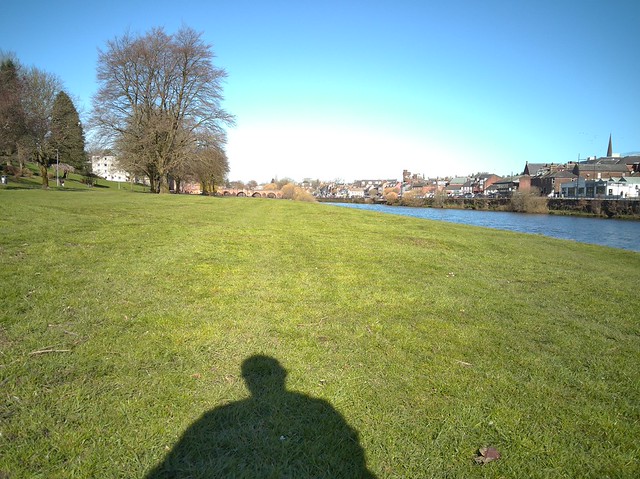
However my shadow is pretty good and I’d agree with other cameras and my trusty EV meter suggesting around EV13-14 @100ISO. Given the alleged spec that should mean a shutter speed of around 1/8000 on the Canny
So the EXIF is not reliable. On testing the lo-light limit is ISO 800 1/8sec (EV 4.67). That may be a fair lo-light limit
10 daylight colour images average at 2.9MB. EXIF shows 80% quality with 2×2 subsampling. Ideally you’d want 2×1 subsampling but other camera in this class notably the CS Pro also use 2×2.
That file size falls off in lower light conditions. It’s a little low TBH but that said no where near supiciously low as the Paper Shoot which produces sub 1MB images. The DPI is 722 which is low but common in the class.
– And that Sensor size ?
So given the EXIF is reliable as a chocolate fireplace what follow is mere conjecture. However its claimed focal length of 3mm and field of view is roughly the same as the paper shoot which also has a 3mm lens. That Is equivalent to a 28mm full frame lens. So taking that and the EXIF focal length of 3mm that would suggest a 1/3″or smaller sensor. That not tiny by lo-fi camera sizes but compared to even decent mobile phones is pretty small.
Funny it matches the Paper Shoot eh ?
So if that’s right a 3mm 1/3″ sensor at f/1.8 will have a whooping fixed focus acceptable (CoC 0.004 mm) focus range of 65cm to infinity with a hyperfocal around 1.25m . That of course assumes perfect optics but…
Set Up
There is no set up bar charging. You can’t fix your date or time (and yup I even tried Paper Shoot Time sync there). Weird as rivals have been busting a gut about that for years and now all my Cappy photos appear to have been taken in January 2025.
Coming back to that charge…
In use
Well the manual in 11 year old held back to the 4th grade tells me to charge for 4 hours, Luckily I unboxed at night.
To turn on the camera you hold down the on button for a few seconds until the lights come on. The LED colours give an indication of battery life. To take a photo use the finder to give a rough approximation of the centre of what you want to take and press the take button.
Unlike the manual’s “Photo is captured instantly” there is noticeable lag from the manual press to the shutter noise. At least that matches to when the image is recorded. It’s another camera I find best press and count to 5 before moving. The manual recommend waiting until the LED lights change back.
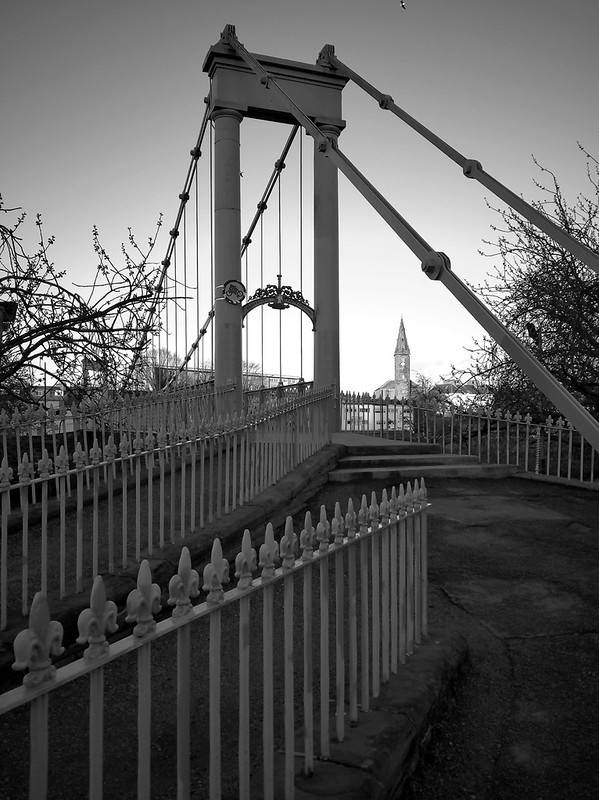
You can switch filters between 4 filters (see result laters). These are not labelled which is a tad annoying but the standard (called vintage) and B&W are the 1st and second from the left,
Holding down the shutter button takes you into video mode with a beep. The LED will flash and press again to exit video recording. The 4 filters work in video mode too. So if you wanna go all noir in camera you can
Access is easy- either take out micro SD or use the USB cable to link to your PC
Battery life I give credit seems not bad. I’ve hit over a 100 images and a couple of video burst, were still good. Granted it’s spent some time plugged in for transfer but I probably didn’t charge it for 4 hours either. Can’t say what it’ll be like in a year when with the paper shoot you could at least swap in new batteries.
Flash is turned on by briefly holding the on/off button (a white LED appears in LED window). Not that you really want to.
Results
So the good news in daylight this can take okay photos within the class. in general. In good light it out performs the £30 Retro Snap V2 and gives the Camp Snap 1.03B a run for it’s much less money
But it’s not all about good light. And this underperforms versus cheaper camera like the Camp Snap Pro even on a good day. But we’ll get to comparisons in a mo.
-General Considerations
Now Lo-Fi is very much in the eye of the beholder. What is clinical imperfection to one is Lomo Cream cheese to another. Your marker for this is not to compare to a full frame Mirrorless with a $800 lens.
Lets take a few shots
-Good Daylight conditions
So we’re talking 13+ EV (or 8.6 if you’re the Cappy). We’ll begin with a brightly lit from the side shot
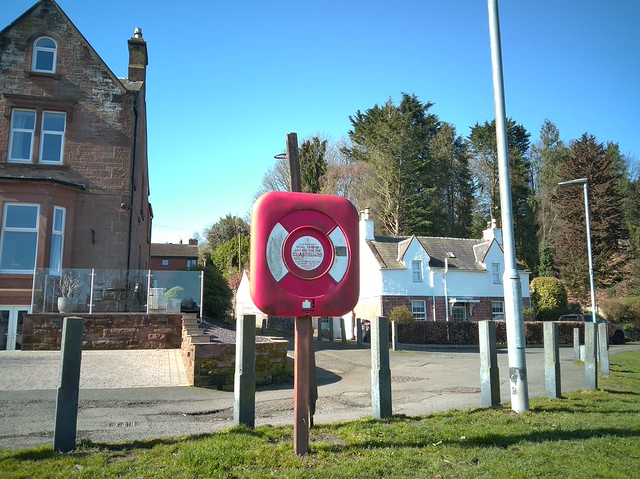
So looks okay for web use. The eagle eyed amongst you will have picked up some slight radial (pincushion) distortion and some white blown out due to small sensor. Neither is bad for the class.
Despite that blow out dynamic range isn’t that awful. Some of the black and white images we get good greyscale levels. Exposure in simple lighting is good. the usual foibles of a area sensor camera exist meaning you get underexposure at times with bright backlights but it’s better than some for this,
Central close cropping reveals good enough 5m focus and detail but some ghosting especially on the left edge of the sign. Again not awful
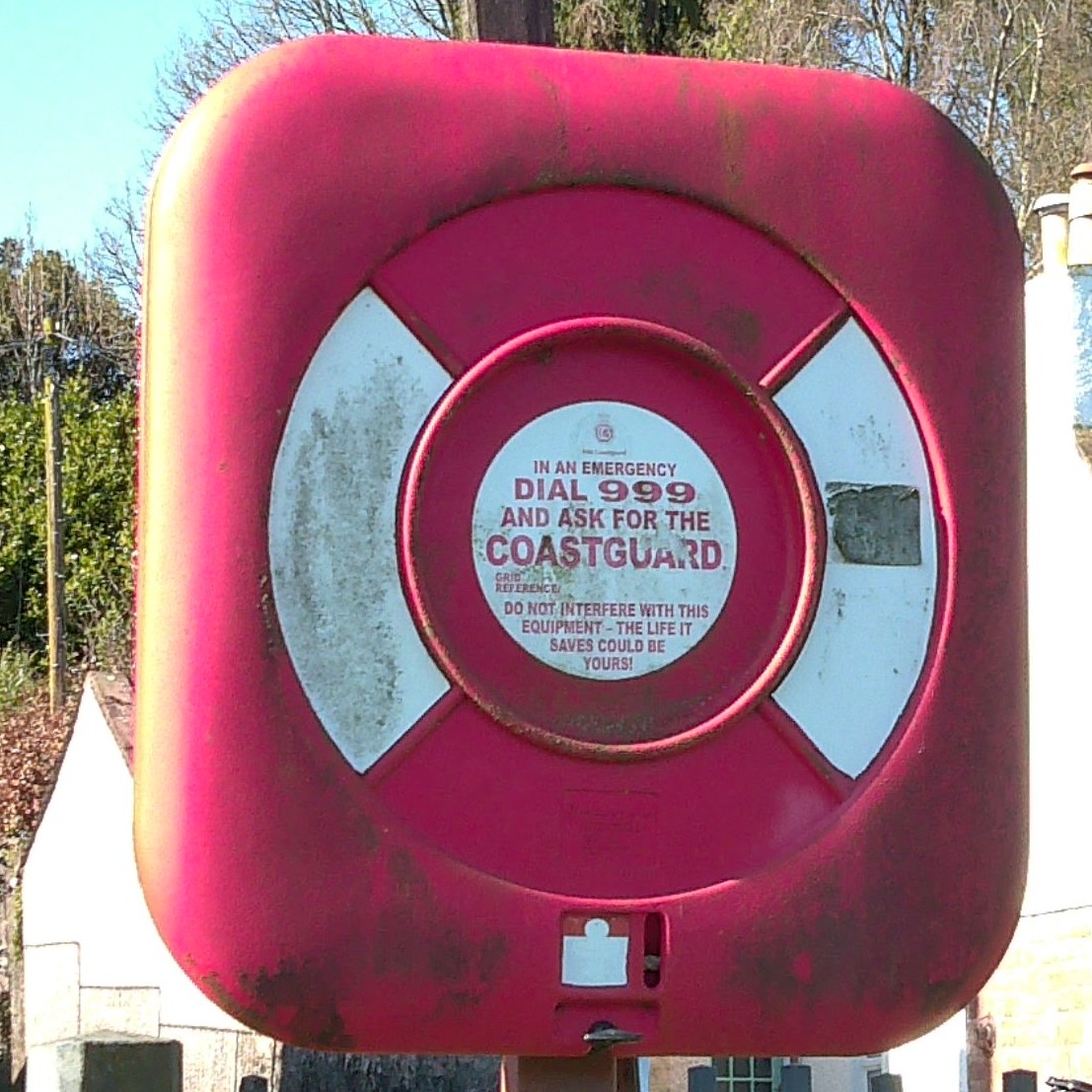
Things maybe less sharp further back but it’s not bad. This camera does okay from about 1m in good light.
Off centre we get some worsening at the top left corner. It’s a distance thing as you see it on other corners when they are at a distance but when within 5m or so as the grass covered bottom corners are here that softness is less noticeable

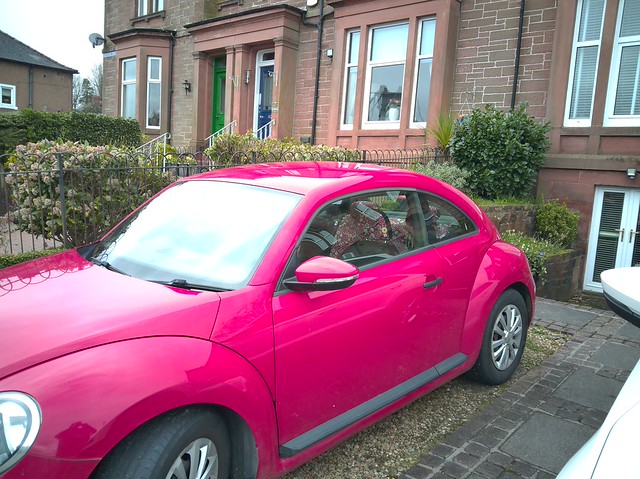
Colour balance is okay but that sign should be redder and this VW beetle has been turned Magenta from Tornado Red in this shot
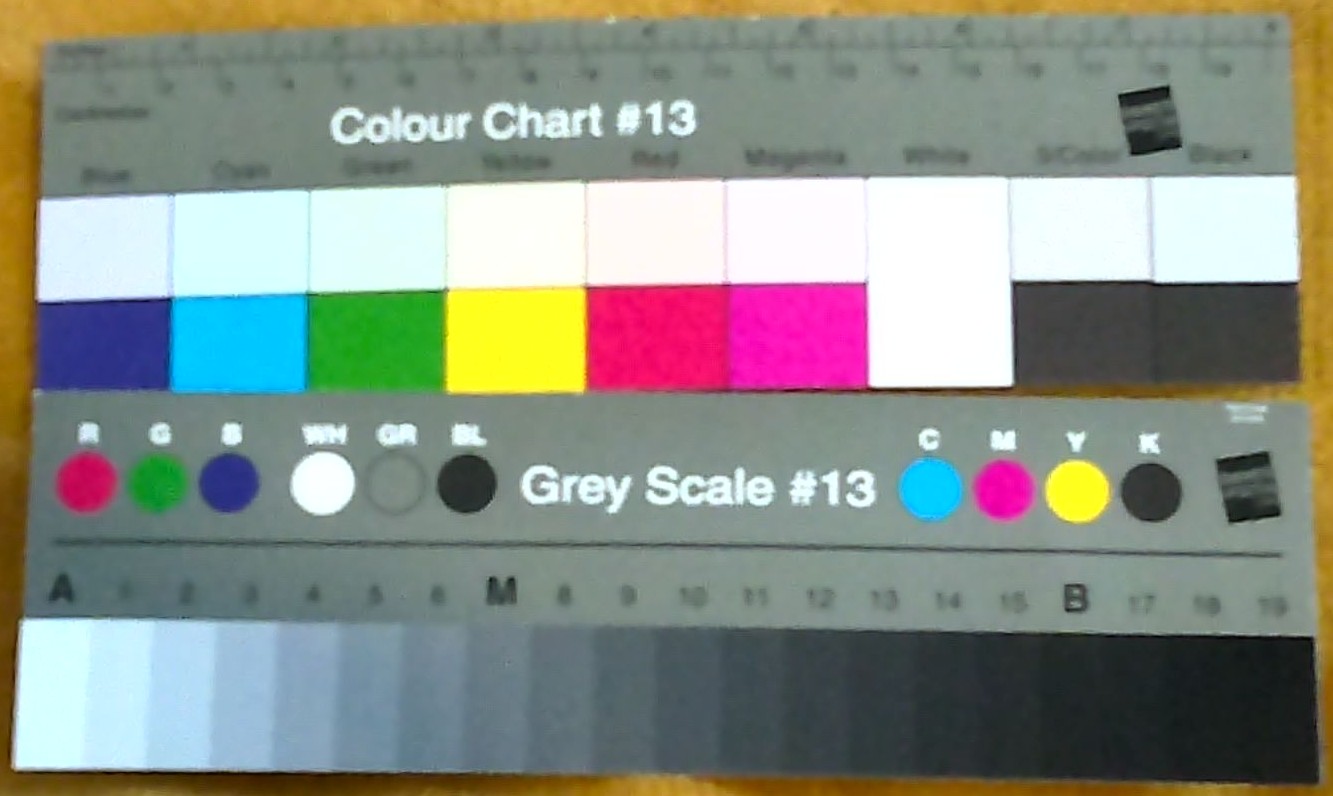
It’s less noticeable on using formal charts but is weaker. Otherwise balance is good in daylight and under LED. There is resonable grescale deliantion and we especially see that on the B&W shots – it’s better than many Lo_Fi cameras there
– 1 shot 100 ISO Cappy V Paper Shoot
Lets take the best shot I could. We’ve good light here although I only hit a maximal shutter speed of 1/120 on 100 ISO (odd as the paper shoot with a narrower aperture hits 1/666)
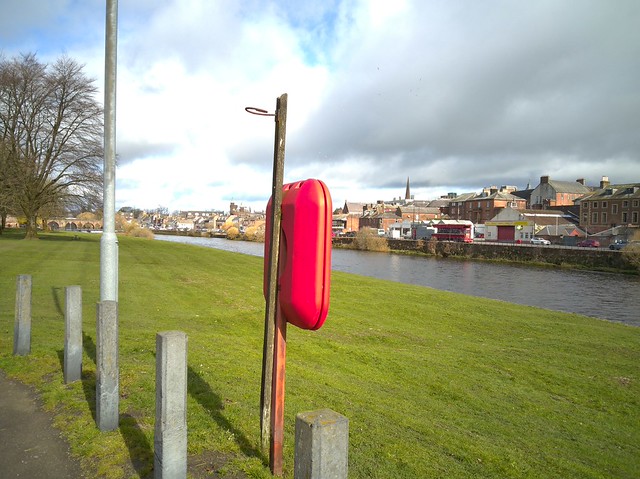
The same shot taken on the Paper shoot I would argue looks better out of the box. Paper Shoot have a nack for their filters and this feels much more vintage than the Canny Camera. theres more softening to the edges that add to that look. I’d argue it’s a stop over exposed but this may be deliberate.
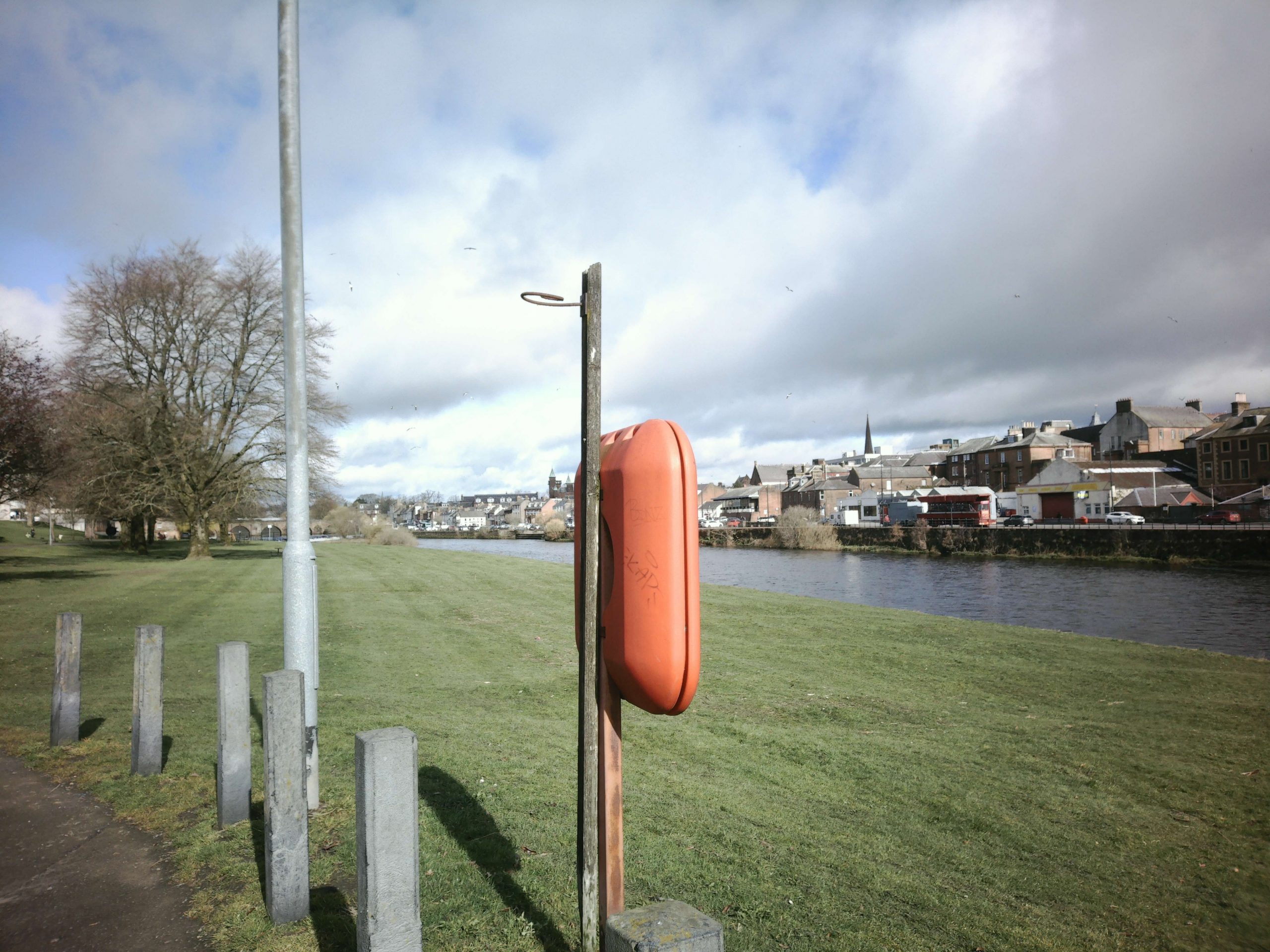
But ignoring film like appeal there are pluses and minus to both images when you zoom in.
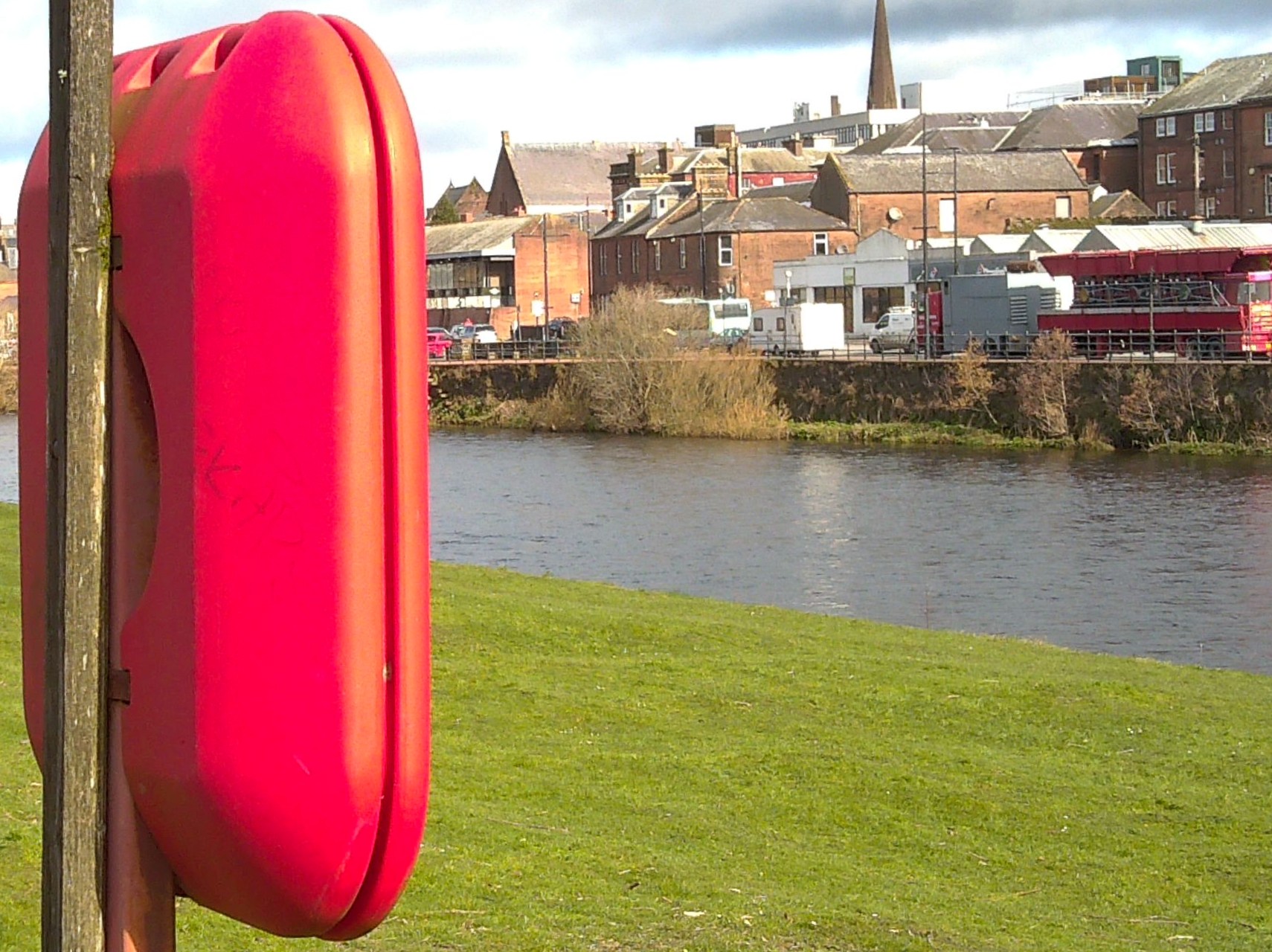
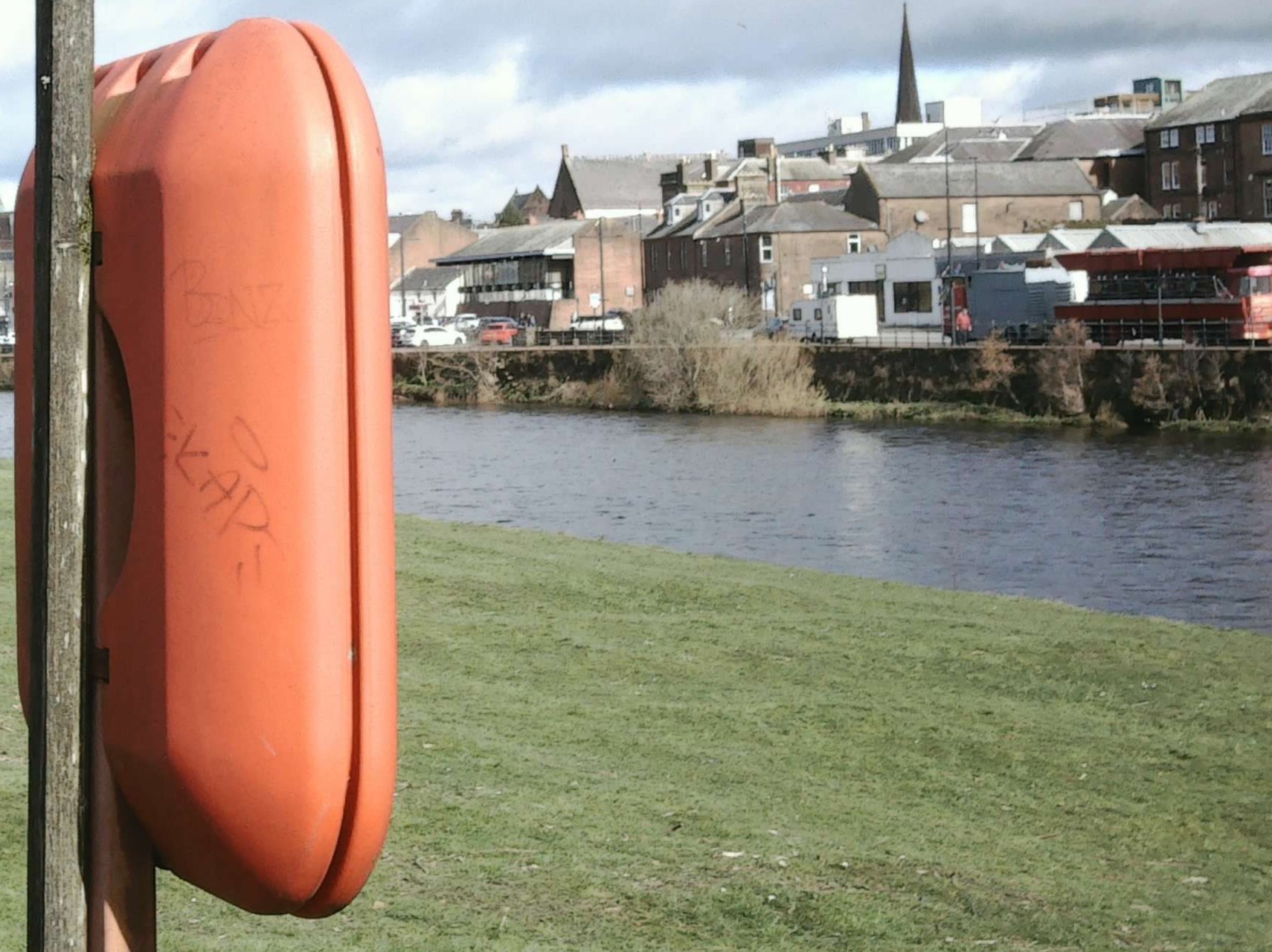
But Canny is more what you see things as although the life buoy is a bit vivid. It also is better dynamically. The Paper shoot has less blown white areas and picks up the graffiti on the life buoy which the Cappy misses. KAP! lives on with the Paper Shoot.
This one is down to personal taste
-Lower light
so as things get murkier eventually the ISO goes up. It but it can only go 800 ISO.
This is midpoint shot with 643 ISO being given
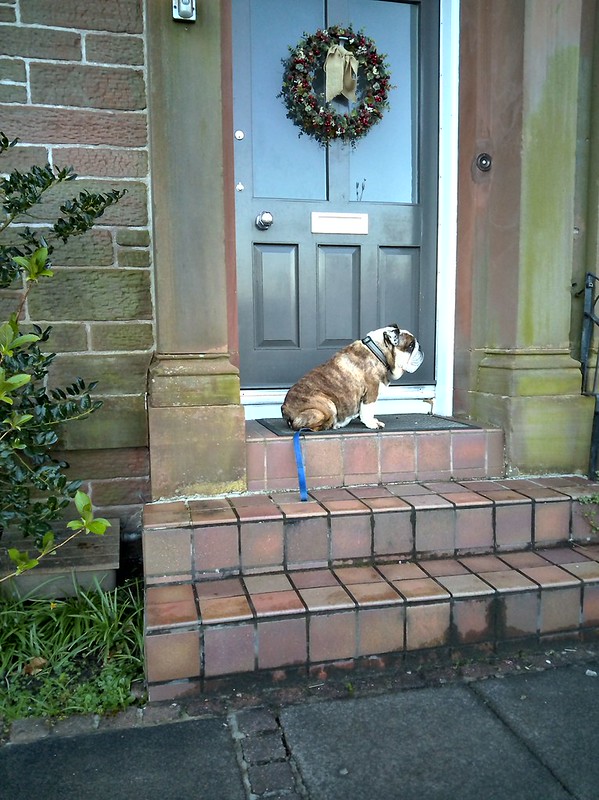
A little more noise but for web use this is okay when you zoom in things go down hill

Lola looks like a bit oil painting smurry, not in a Blind years Monet level but certainly you’d get away with hanging that in Paris Salon in the 1880’s
Now I could put up the Paper shoot here but it’s frankly better. It gets more noisy but in grain like fashion. Hang on to very low light.
So lets take another Camera
The EXIF is an issue here. Take the same shot (Lola was more agreeable) taken within seconds of the above shot on a Camp Snap Pro. The image quality is much better overall with more detail preserved even by the lower 16MP sensor
Camp Snap EV calculates alight level almost 3 stops higher than the Cappy (and about right for the near dusk conditions) and whilst Lola looks a little noisy zoomed in she’s no oil painting (in a good way)>alos the bigger sensor doesnt blow the white of her fur out anywhere as much we’ve decent gray scale delineation on the whites here.

But this is arguably the best quality screenless I’ve used from a clinical perspective. The Cappy whilst lagging behind is doing okay for the average camera in it’s class
Lo-light
The noise levels escalate as the iSO rises. It oddly can do an okay job of exposure although the EXIF of the below shot wants you to believe it’s less than a ½ stop longer exposure than the photo of Lola above.
For web use you kinda can get away for a small 640 px width image or less but even then you see noise
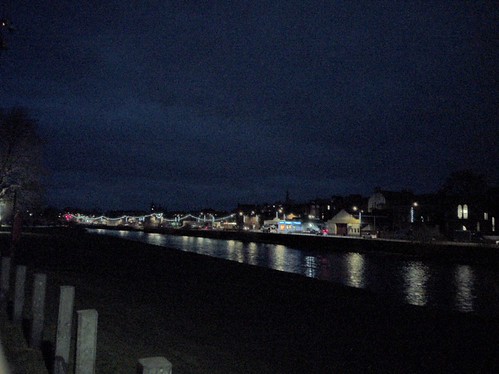
But zoom in and horror awaits. Again it’s not awful but decidedly below class average

Now lets bring back in the paper Shoot

Now I know you’ll tell me this is a lighter image but the EXIF actually reads lower (About EV 2.5 @100ISO versus EV 3). Paper Shoot isn’t brilliant but it’s just noisy and not over processed when you crop in

I prefer this to the over processed imag that the cappy gives although you can perhaps delineate some more details amongst the overprocessing of the Cappy
-Flash
Just forget it. Cappy recommends using their Flash at 2m or less. So here is my Lion Gent in almost total darkness at about 1.8-2m away
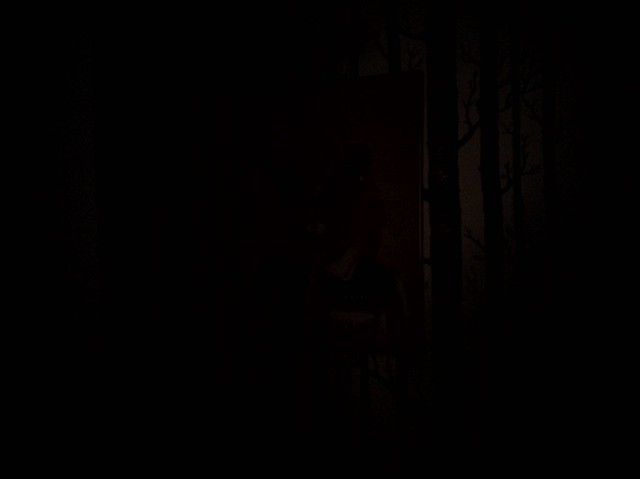
Don’t worry you can hardly see anything and that fine but lets put the puny LED flash on and get disappointed.
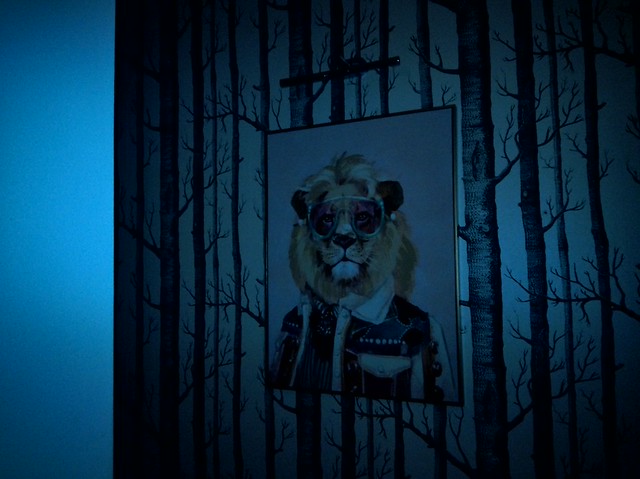
Yes it is that bad and yes I checked my finger was out the way. A typical very weak LED Flash
The same shot taken on a Echolens which has a Xenon Flash from a slightly different angle
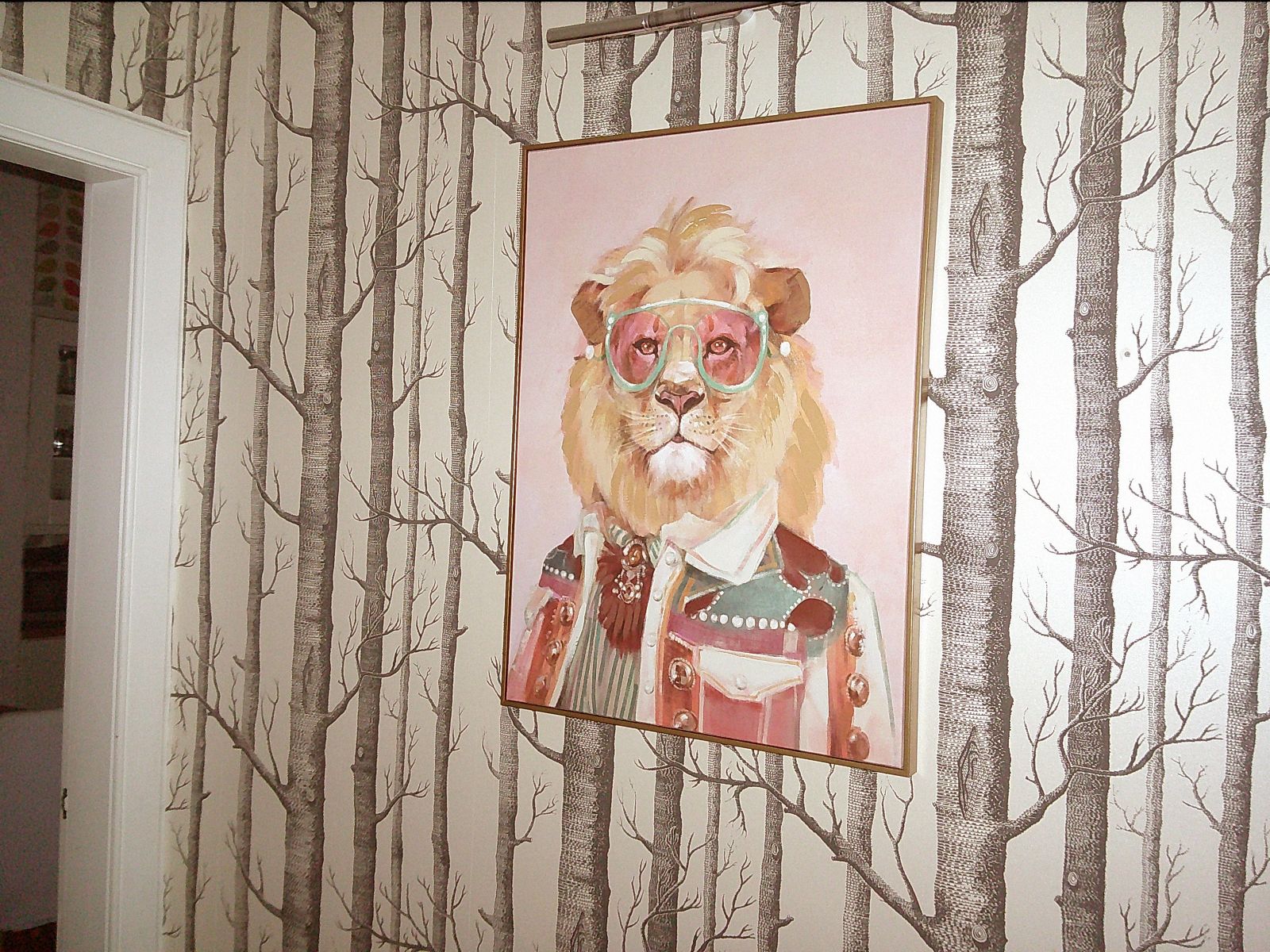
Granted the Puny LED gets better at about 1m but things are still underexposed
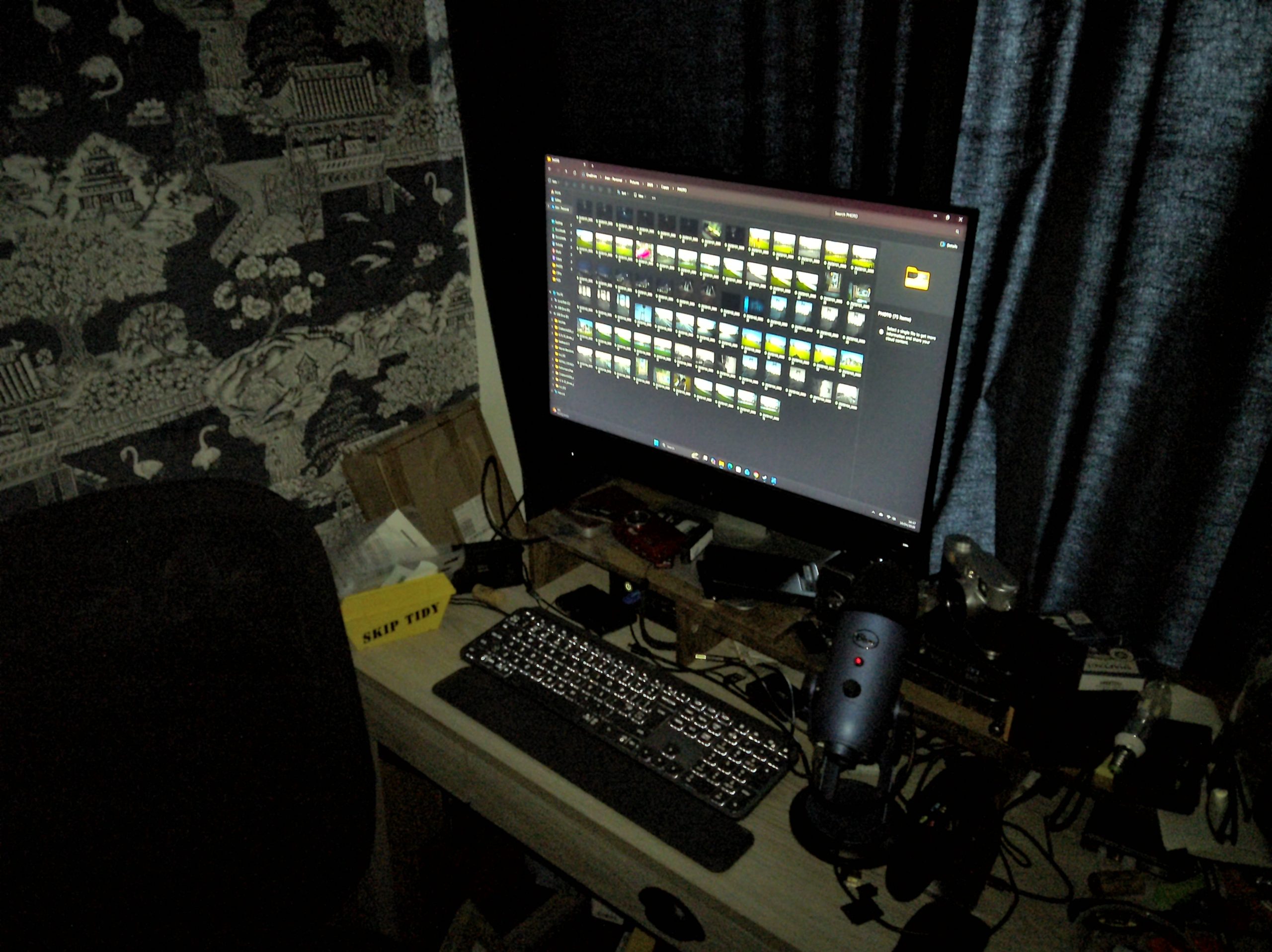
Filters
So we get 4 filters with the camera. These seem to have changed slightly from their blog post in November 2025 to what is in camera &described in manual. They’re okay but not exactly that film like
-Vintage (aka standard)
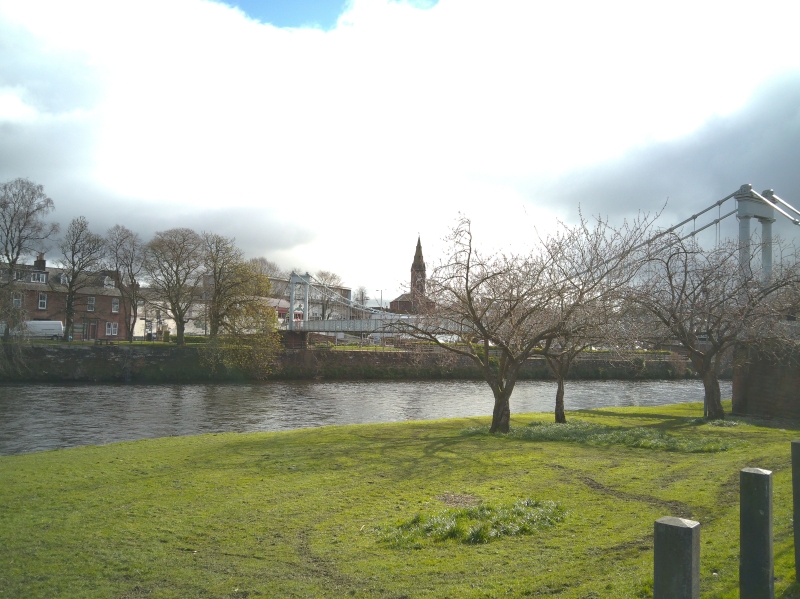
It’s pretty much the default. Not sure why they call it vintage (Soft tone should have dibs) still reasonably colour accurate bar the odd moment with reds.
-B&W
Does what it says on the tin.
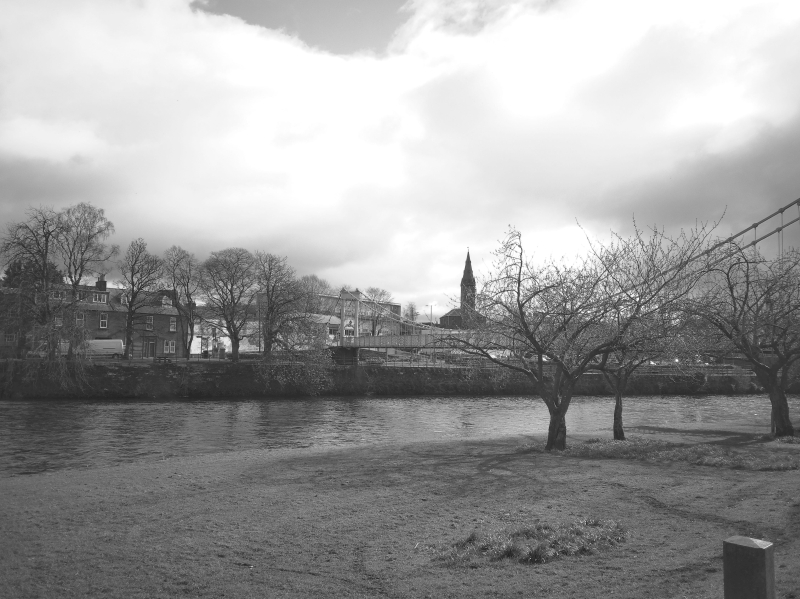
Contrast is mid range. Likely to be the only other filter you use day to day
-Soft Tones
It is more what a vintage filter should look like than those. It’s pleasing enough and possibly nearer a film look than anything else here

-Vivid
Greens ramped up here as is the image vividness and gamma. I quite like it but realise I probably am better shooting in Vintage or Soft Tones and fiddling in lightbox
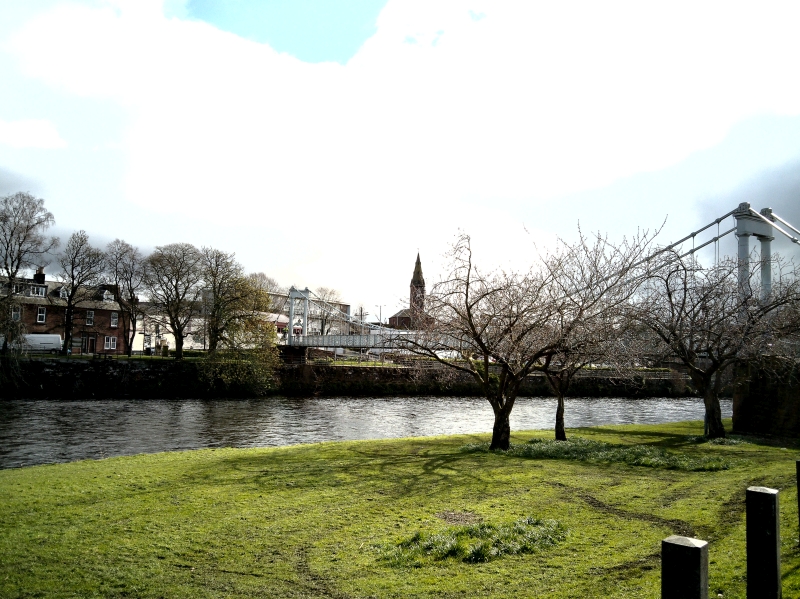
Video
Okay now in fairness I don’t get this on a Lo-Fi digital. I mean just why. But that said this is a thing especially with the vintage camera market. So It weridly fills a specific niche there. Cappy offers currently the only screenless lo-fi digital that can shoot video without weird requirements (papershoot requires a power bank) and the only one with a flash.
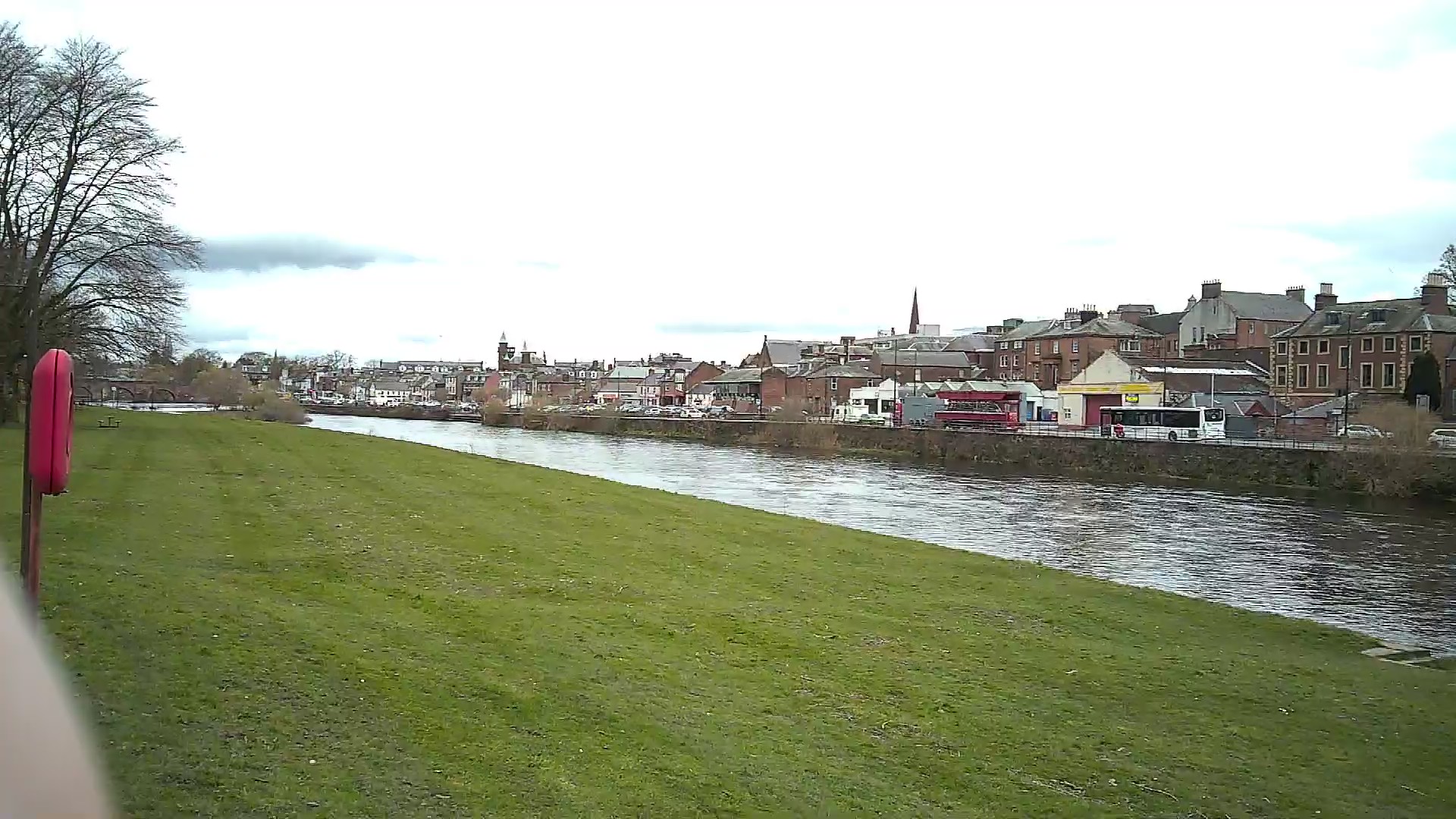
And the video ain’t awful. It’s not great either but ……And I say this with a weird I don’t understand how they did it, but it actually takes less Shakey footage compared to the Kodak PixPro C1 which makes me think there is some sort of image stabilisation going on (one that works better than the Kodak’s ). Exposure adjusts
It’s bit over shrapened and the audio ain’t great.
On reflection, it reminds me of the footage you got with consumer hand held mini DV camcorders footage from the early 2000’s
But this is video in a Lo-Fi screenless digital. No one else offers it. And as I guy who likes lo-fi screenless still cameras as I shoot a lot of film cameras I kinda vague understand why some get this – It’s as close as you can get to shooting home movie film camera digitally with no screen to check or review. It’s just not my bag. .
I’ll add a Video example file in due course.
Final thoughts – A Mixed Bag
This didn’t go as I was expecting. This is better than I assumed but….
For stills sorry at the end of the day this is a clone of the Paper Shoot plain and simple. It does a some things better (more info on battery life, decent strap lug holes, an on/off switch and slightly better dust intrusion).
But It currently lacks the accessory support of the Paper Shoot. I mean it’s brilliant there’s an option to swap filters but are those Filter SIM cards in the room with us ? The case has some fit issues. And Paper Shot standard filter is amongst the best on the market for real film like look. The Paper Shoot’s image quality is better (slightly) and can shoot in way lower light conditions. And neither is anywhere near the top of the class.
And to be frank most rivals like Camp Snap, Echolens and the soon to released RewindPix offer user customisation without having to pay for a card. Granted you could argue that the Camp Snap Pro out of box filters are no better -not analogue looking enough – but you can change them and it cost about £70 less.
And the much vaunted flash is frankly a own goal. There’s a reason why more higher aspiring Lo-Fi have Xenon not LED units
And perhaps worse they want $155 for this before shipping and taxes? If it was ⅔rds of that it would feel more reasonable given the image quality. admittedly it’s about what Paper Shoot charges but it’s filters are better and it does better in low light and has the accessories
But…
But then we get to the video. This I think is the sleeper killer USP of the camera. No one else is doing this as easily and this may make sense to some. It also is better quality video than cheaper screened lo-fi cameras like the Kodak Chamera
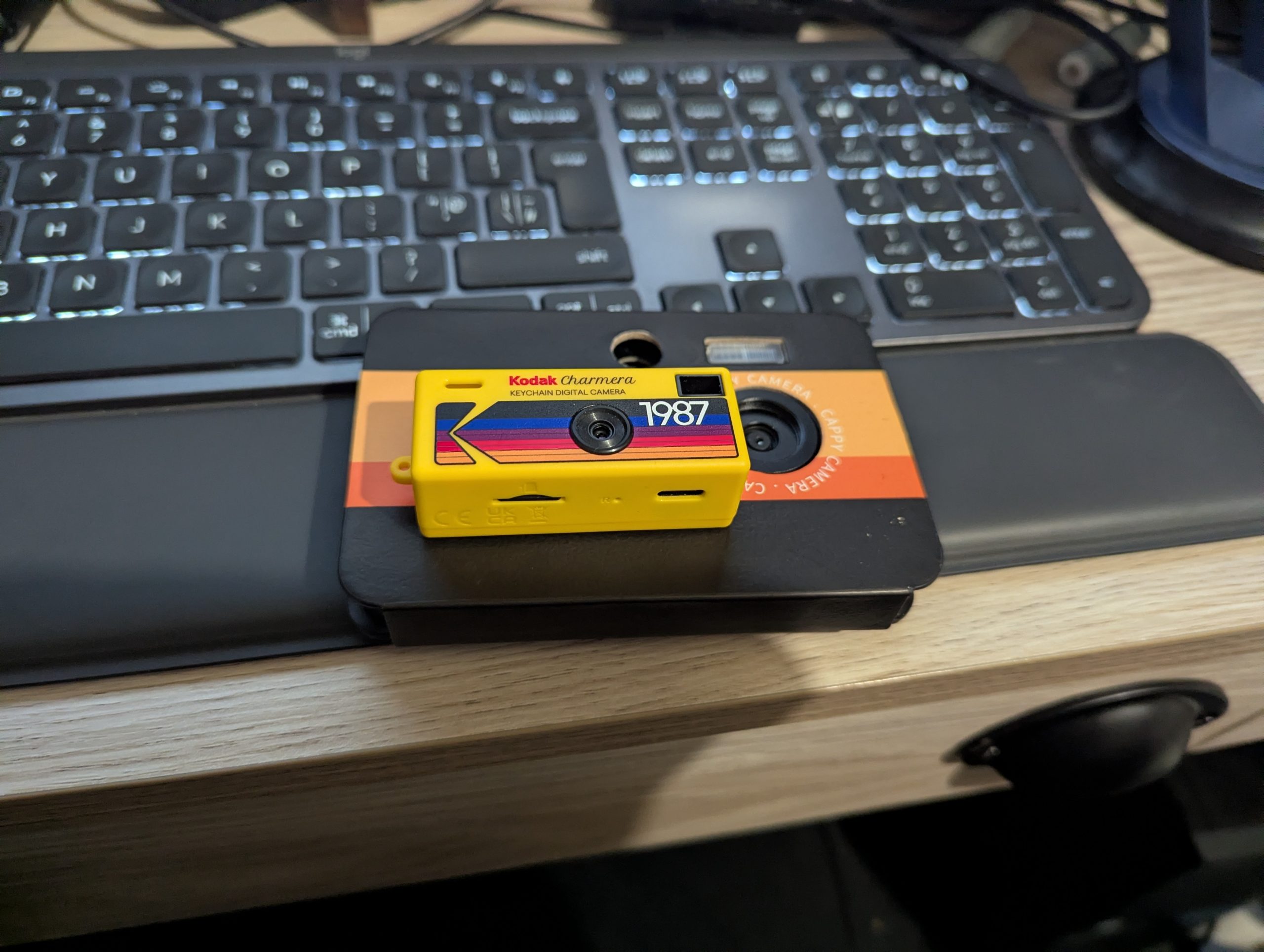
So if you want a lo-fi screenless that can shoot video then Cappy really is your only choice. And in fairness it makes sense if that’s what you need.
But for everyone else there are cheaper or more film like choices. And that’s before you get onto the morals
Morals ?
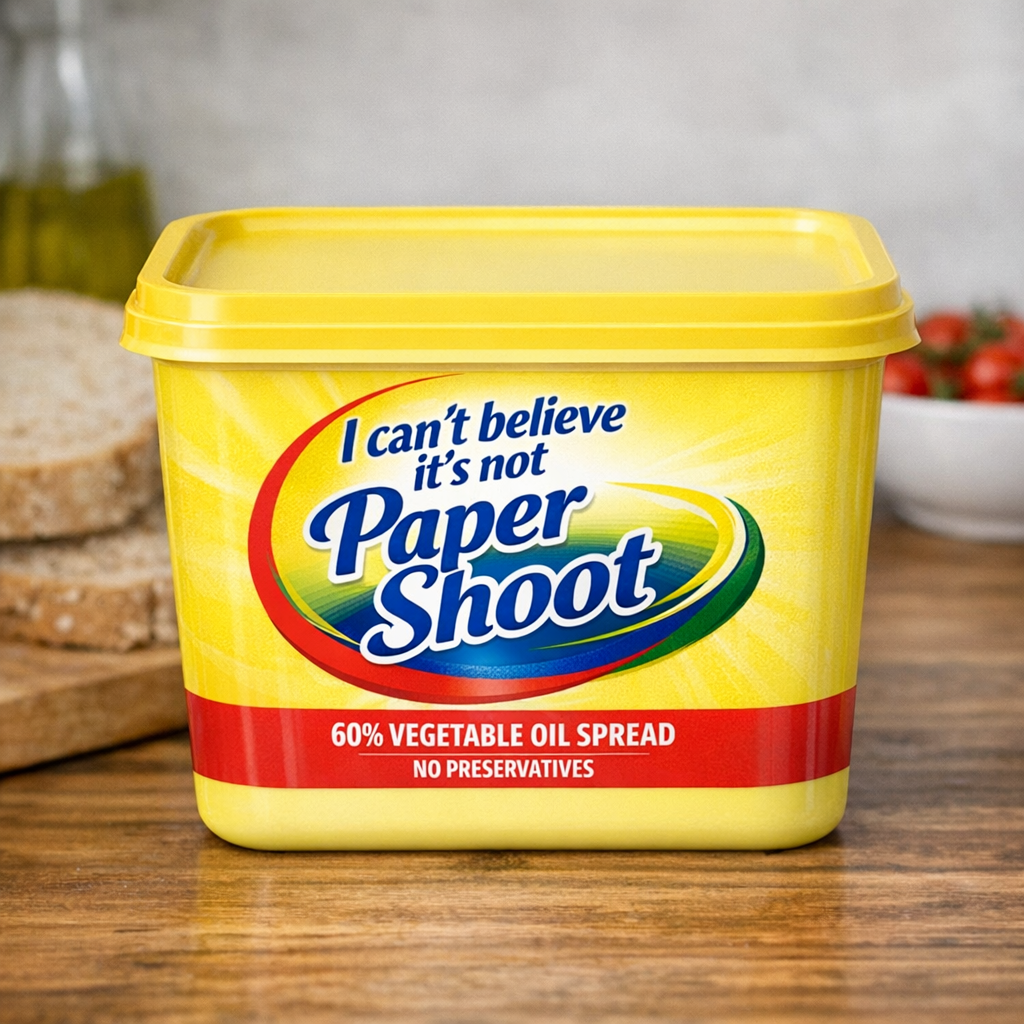
You can’t escape from a still lo-fi camera PoV this a knock off of the Paper Shoot. It is incredibly well executed but bar the video and better strap management the other features this brings only bring at best incremental improvements. Many don’t really make it any different. The big SDHC card is nice but only adds a few quid – it only makes sense for the video enabled Cappy not stills only rivals.
The flash is frankly laughable (in fairness LED flashes are pretty common in this class an all frankly rubbish). Paper Shoot still takes more film like images although it has something weird (cough.. interpolation.. cough) going on .
And this at the end of the day was developed by a former distributor of Paper Shoot whom depending on who you believe either when or surprisingly quickly after their relationship with Paper Shoot went tits up.
And there a fair amount of shameless self promotion and marketing Bullshit going. I suspect they can’t go anywhere near Paper Shoot by name but boy do they sell themselves up against the rivals often being inaccurate and highly economical with the truth if I’m being generous. Notably in their own comparison to Camp snap cameras they left out the fact all camp snap cameras have effective infinite filter choices thanks to the new website custom filter generator, claiming you couldn’t change filters – whereas you could with the currently non existent SIMs for the Cappy. Now that may just be AI overlooking that but.. Same goes for the accessory lenses. Cappy sell you 2. But the Camp snap pro also has a filter ring and with a 37mm filter you can much easier access a range of 3rd party lenses and filters
And on the same post they chuck in
“Swappable Cases, Lenses, and Filter Cards — Nothing Else Has This”
Well you don’t actually have any filter cards at the moment do you ? And haven’t you just described a paper shoot there ?
What you should buy
(unless you need the video)

If the idea of a eco friendly, Lo-fi screenless still camera with 4 filters which you can swap out and offers a lo-Fi film like image quality just get a Paper Shoot. I’d argue they are over priced but you get infrastructure and accessories. The image quality isn’t near class best and the fact the average image is less than 1MB for a 20MP makes me think the rumours of interpolation are pretty likely. I can get one for less than I can a Cappy and I’m buying into design heritage who actually have the SIM filter cards for sale. See my heads up of the 20MP Paper Shoot v the awful Retro snap version 1
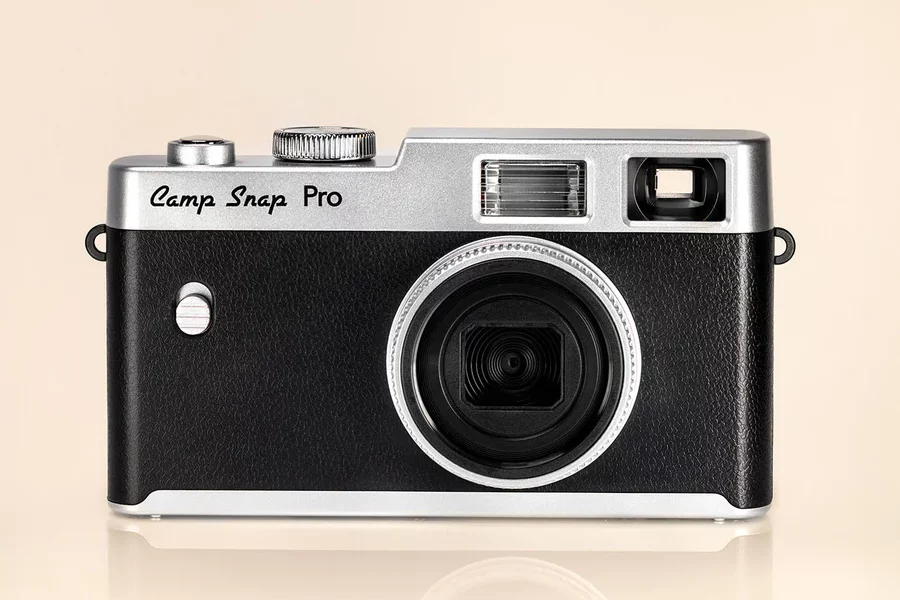
But save some money and look at other rivals . Camp Snap has become the dominate player. The Basic Camp Snap (now model 1.05) offers a simple no frills screenless that you can pick up on the British high street for about £60. It take surprisingly good images and yup you’re limited to one filter at a time but you can now customise that. The Camp snap Pro gives you 4 filters to play with a class body and the best in class lens sensor set up clinically. It’s still about 2/3 the cost of the Cappy but takes better pictures and has currently an infinite amount of filters and a decent flash
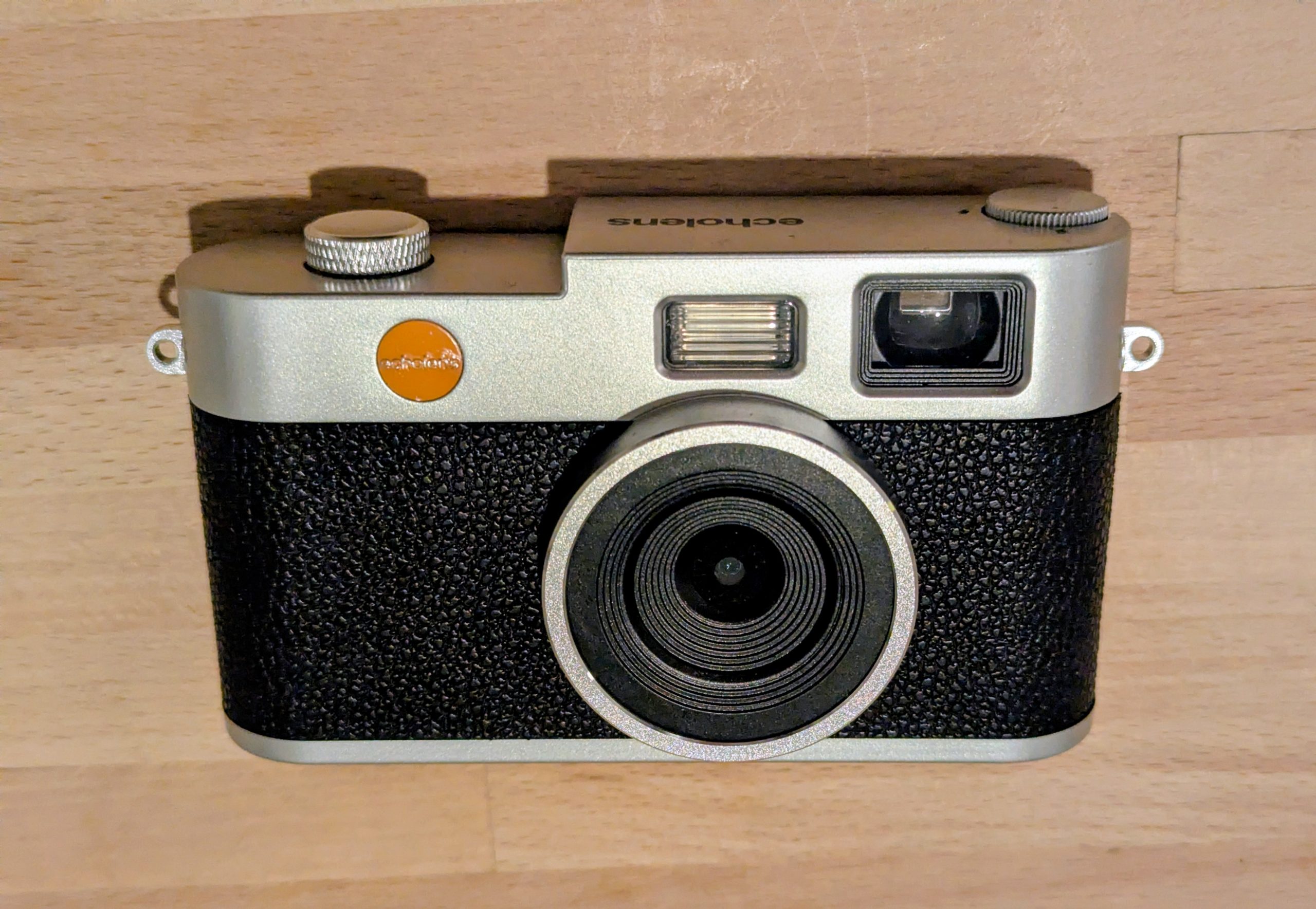
Echolens gives a glimpse of what a screenless digital with app based filter customisation can do but is flawed (still better still wise than the cappy). Flashback ONE35 give the niche as close to a cheap film disposable experience you can get in this class with a robust well made camera and a price tag to match. Both will be awaiting the arrival of the Rewindpix